

NGO and Youth Work
Community Educator (Bachelor of Humanities)
Inspire, support, evolve – build the future in communities
The Community Educator degree provides you with comprehensive skills to play an important role as an expert in youth work and NGO activities. You will learn to design and implement projects that support and develop communities, strengthen participation, and work in diverse environments.
You will graduate as an expert in appreciative and respectful interaction for the fields of youth work and NGO work. You will understand the diversity of society, identify structural factors that create inequality, and be able to use research and theory to actively seek solutions. You will have the courage to envision and develop better futures together with networks. You will know the channels and means of advocacy, enabling you to address societal development needs.
Your core competence lies in promoting inclusion and well-being, anticipating future needs, and actively planning and developing services together with people and communities. As a professional, you can work with various age groups across different sectors both in Finland and internationally.
Who is this programme for?
Future youth work professionals
Have you dreamed of a job where you can support young people, influence society, and do meaningful work? This degree programme equips you to work as a youth work professional, for example as a youth worker, instructor, project worker, or specialist. During the studies, you will learn a wide range of skills related to working with young people and explore various youth work environments.
Future non-governmental organization work professionals
Have you dreamed of work, where you can strengthen communities, influence society, and do meaningful work? This degree programme equips you to work as an expert in the work of non-governmental organizations, for example as an instructor, planner, developer, project worker, or executive director. During the studies, you will learn diverse skills related to NGO work and become familiar with different environments of associations, organizations, and foundations.
Professionals in youth work or non-governmental organizations (NGOs)
Are you already working in youth work, non-governmental organizations, or for example in church-related roles, but wish to deepen your expertise? This degree programme offers you new perspectives, practical methods, and theoretical knowledge to develop your work and work communities, create new operating models, and strengthen your professional competence. After graduation, you can advance to more demanding expert positions or development roles.
Career changers and professionals developing their career paths
Are you looking for a new direction in your career and want to find a role where you can develop your skills in meeting and guiding people, as well as supporting and developing communities? The degree programme offers concrete tools and versatile career opportunities in the fields of non-governmental organizations and youth work. You can build your own career path based on your interests and previous experience, for example in NGOs, the public sector, business, or international environments.
Programme content
Community Educator studies consist of common studies, professional basic studies, and specialization studies. During the studies, you will develop both theoretical understanding and practical skills needed for community development, non-governmental organizations’ work, and youth work. The scope of the degree is 210 ECTS credits, and it usually takes 3.5 years to complete. Study paths can be individualized through recognition of prior learning (RPL).
Common studies provide you with the skills for studying, working life, and proactive development. Ethics, internationality, and cultural diversity form the foundation for community work and the development of expertise.
You will become familiar with the core competencies of a Community Educator and essential pedagogical skills. These include, for example, guidance, activity-based methods, strengthening participation, and promoting diversity. You will learn to plan and implement activities for different groups. These studies combine theoretical foundations with a work-life orientation.
You can specialize in youth work or non-governmental organizations’ work according to your interests. You will choose your specialization after completing approximately 60 ECTS credits. Youth work studies prepare you to work in various educational, guidance, and expert roles with young people. NGO work studies prepare you to work in societal advocacy and lobbying tasks as well as in various expert roles.
Internships are an important part of your studies and provide an opportunity to apply what you have learned into practical working life. Internships can be completed, for example, in youth centers, schools, child protection services, workshop activities, meeting places, non-governmental organization services and administration, as well as in various development projects. You can also complete an internship abroad. Internships allow you to become familiar with different organizations and tasks and to network with professionals in the field. Internships are an excellent opportunity for you to find your place in working life. Therefore, the Community Educator degree includes four internships.
In research-based development studies for working life, you will learn to identify development needs in working life and find solutions for them. The module includes two study units and the completion of a thesis. You will choose the topic of your thesis based on a real working-life need. The client for your thesis will be an actual working-life organization.
At Humak, the RPL, i.e. Recognition of Prior Learning process, means in practice that a student can make use of their prior expertise to advance their studies. This expertise can come from work experience, prior studies or, for example, hobbies and volunteer work, if they are related to the goals of the studies. Approved skills are entered into the study register, which can compensate for a course partially or entirely. Your personal coach is responsible for the RPL procedure.
We also offer you the opportunity to complete courses as summer studies
Online or blended studies?
Helsinki
Online studies are perfect for you, if…
You are a motivated self-learner
In online studies, you get to make use of your independent working and planning skills. You will still get to enjoy a sense of community through group exercises and projects and will get peer support from an online-based student community.
You live far away from our campuses
With online studies, you can complete the entire degree regardless of where you live. You study with an online community with the help of versatile online tools.
You want to combine work and studies
Online studies enable a flexible way of studying, as most of the studies are done independently. Flexibility helps you to adjust your studies with your life situation.
You already have experience working or studying
Online studies are especially suited for you, if you already have experience of working life or prior studies, although this is not a requirement. Your experience will help you work independently and to plan your studies.
Helsinki Jyväskylä Kuopio Tampere Turku
Blended studies are perfect for you, if…
You want to study in a communal and flexible manner
Blended studies are for you if you want to combine the community of campuses with the flexibility of networks. You will be supported by coaching, encouraging support from a student group as well as a clear, jointly progressing study path. Online studies will add flexibility to your studies.
Studies at an institute of higher education are a new beginning for you
Blended studies are an excellent choice for you especially if you are applying for your first academic degree or it has been some time since your previous studies. You value community learning and encounters both on campus and online.
You want a clear routine for your studies
In blended studies, you get a clear study routine, thanks to alternating studies between the campus and online. As the studies progress, teaching online and on campus decreases, and the proportion of independent work increases.
In the spring 2026 joint application, you can choose Helsinki, Jyväskylä, Kuopio, Tampere, or Turku as your place of study. The contact teaching days of the blended learning programme will be organised in the city you choose.
What skills will you have upon graduation?
After graduation, you will be able to develop communities and strengthen the well-being of individuals and groups. You will have the competence to work as an expert in youth work, in various non-governmental organization roles, and in international environments.
As a Community Educator, your professional skills are built on pedagogical, communal, societal, and advocacy and development expertise.
Our goal is, that upon graduation, you know how to…
Interact with people in diverse situations
Osaat toimia moninaisissa yhteisöissä ja ymmärrät, miten erilaiset lähtökohdat ja kulttuurinen moninaisuus vaikuttavat ihmisten toimintaan. Tämä taito auttaa sinua kohtamaan ihmisiä heidän yksilöllisissä tilanteissaan.
Support groups and individuals
You can facilitate groups and individuals using pedagogical methods and support personal growth based on theoretical approaches to education and development. This competence helps you create goal-oriented and practical facilitation situations.
Promote equality, equity, and human rights
You know how to build participation, strengthen agency, and create a sense of community. You promote socially, culturally, ecologically, and economically sustainable development. This competence empowers you to act proactively and support well-being in a wide range of contexts.
Network professionally
Osaat rakentaa yhteistyötä eri toimijoiden välillä ja osaat luoda verkostoja, joita voit hyödyntää työssäsi. Tämä taito on tärkeä sekä paikallisessa, valtakunnallisessa ja kansainvälisessä kontekstissa.
Make a societal impact
You can act as a societal influencer by using various forms of advocacy and communication. You are also familiar with how societal structures, service systems, legislation, and politics affect youth work and non-governmental organizations’ activities.
Develop activities
You can plan, implement, and evaluate activities, services, and projects that meet the needs of both communities and individuals. This skill is essential in the changing fields of non-governmental organizations, youth work and in broader societal change. You are able work with a developmental approach in the public, private, third, and fourth sectors and their networks.
The Community Educator Bachelors’ degree opens doors to diverse career paths
Community Educators specializing in non-governmental organizations work or youth work are employed, for example, in youth work, NGO work, educational and guidance roles, public services, as well as in the private sector and as entrepreneurs. Central to the work of a Community Educator is working with people and strengthening inclusion, interaction, and collaborative communities.
Community Educators specializing in NGO work and youth work, are for example working in these positions
As a professional in the NGO sector in…
- planning and development tasks
- service and administrative tasks
- advocacy and lobbying tasks
- communication and educational tasks
As a professional in the youth sector in…
- facilitation and development tasks
- tasks providing special support for young people
- service guidance and multidisciplinary network tasks
- youth policy advocacy tasks
As a project work specialist in…
- planning and development tasks
- a role of project manager or project coordinator
- service development tasks
- tasks that promote participation
Additionally, a Community Educator can work, for example:
- child protection services
- community-related tasks in educational institutions
- as a service entrepreneur
- as an education provider
- as a content creator
Further information
Degree information on StudyInfo
Read more about admission criteria and upcoming application rounds.
Want to know more about the degree?
Download our digital brochure (in Finnish) to find out more about studying at Humak.
Need help?
Our admission services are here for you!
You can contact us by email or phone.
The contact information opens from this link.
Related degrees
Adventure and Outdoor Education
Daytime studies (in English)
Helsinki
Youth Work and Community Wellbeing
Daytime studies (in English)
Helsinki

Read more about NGO and Youth Work
Dive deeper into the topic with our articles, blogs and web publications.
- Blog
- NGO Work
- Youth Work
Becoming a Professional, part 1: Community Educator (Bachelor’s Degree), NGO and Youth Work: A profession that matters every day
- Publication series

- NGO Work
Ever Wanted to Be an Explorer? – Tikkala Schoolchildren Learning at the Struve Geodetic Arc at Oravivuori Station Point
- Blog
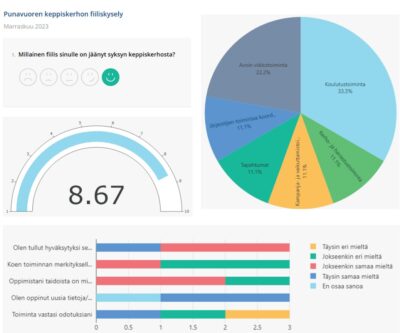
- NGO Work
- Youth Work
User-Centered Development Improved the Usability of Jarjestin | Harticle
- Blog
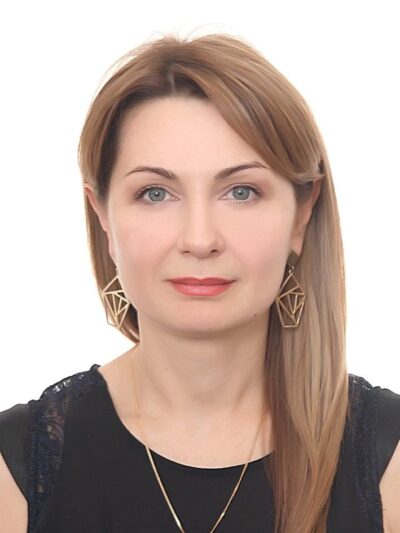
- Youth Work
Harticle: Impact of Hybrid War in Ukraine on Mental Health of Youth
- Blog
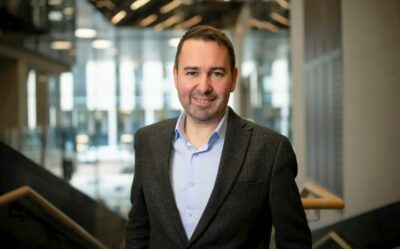
- Youth Work
Harticle: Considering the ”Process” in Peace: Hope, Reconciliation and Young people in post-conflict Northern Ireland 1998 – Present
- Blogi
- Nuorisotyö
- Youth Work
Touching reflections on “The Diversity of Hope” – the keynote speakers’ personal reflections on hope in the midst of conflicts | Harticle
- Publication series

- Youth Work
Developing Youth Work Innovation. E-handbook.
- Publication series
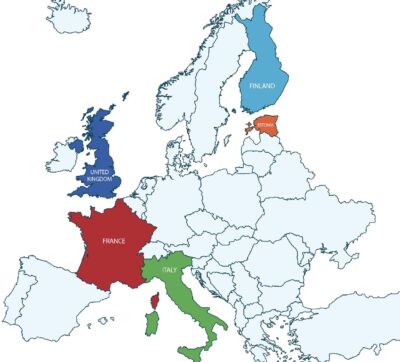
- Youth Work