Towards a bilingual language learning path in Outdoor and Adventure Education at Humak: First steps
In 2018, Humak launched an English-language Bachelor’s Degree Programme in Adventure and Outdoor Education. Now Humak is piloting a language-integrated learning model through the BiEd project, aiming to enhance students’ language skills and employability from the very beginning of their studies.
In 2018, Humak launched an English-language Bachelor’s Degree Programme in Adventure and Outdoor Education, which has since grown into a truly international offering. As more international students seek to build careers in Finland, the need for better support in learning Finnish has become increasingly evident. To address this, we are piloting a language-integrated learning model through the BiEd project, aiming to enhance students’ language skills and employability from the very beginning of their studies.
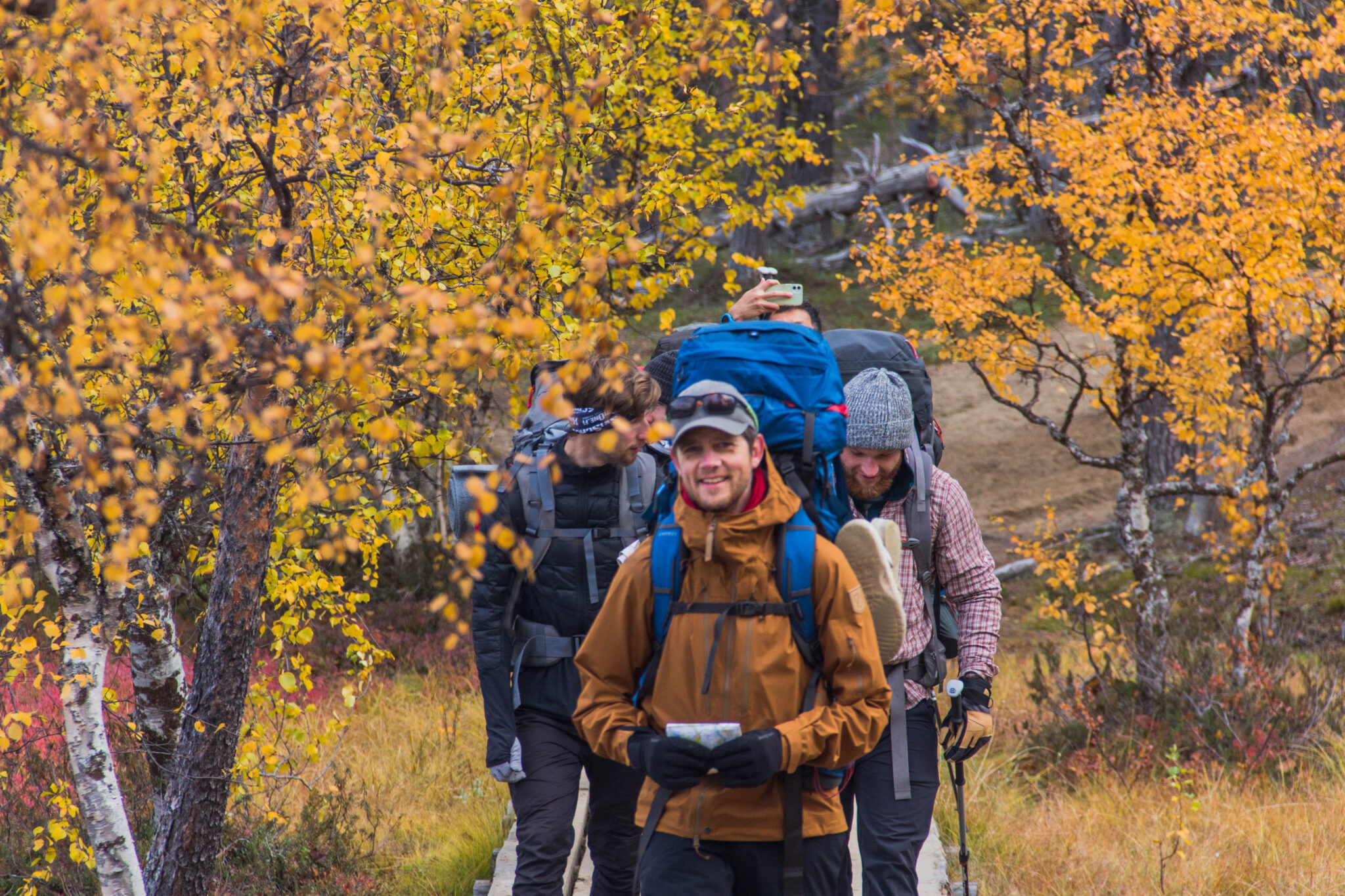 Outdoor adventure education students on an autumn expedition in Lapland. Photo: Rupak Maharjan.
Developing better support for learning Finnish addresses a well-documented need
In the autumn of 2018, Humak launched a new Bachelor in Adventure and Outdoor Education (Community Educator) degree programme. Humak has offered adventure education for more than 20 years as part of the Finnish Community Educator degree programme, as vocational continuing education and via open UAS courses, but this was the first time Humak had offered a full degree programme in English. Half the students in our first student cohorts were Finnish. However, over the past eight years, the adventure education programme has evolved into a truly international education offering, attracting students from over 30 countries around the world. An increasing number of our foreign students are keen to build a permanent career in Finland.
Our main focus, in these early years, was on content, curriculum development and the practicalities of running a programme attracting students from diverse backgrounds from all around the world. The programme included Finnish language studies, but lacked consistent, high-quality support for learning Finnish throughout the studies. To address this challenge, Humak has joined forces with four other universities of applied sciences and launched the BiEd Bilingual Education project. With support from the European Social Fund (ESF+), the BiEd project seeks to embed language learning opportunities and support into English-medium degree classes, to develop a language-integrated model for student work placements and to empower teaching staff to support language learners.
This is a very welcome direction: multiple studies (Lauronen 2025; Lu & Everson Härkälä 2024; Välimäki, Pitkänen, Niemi & Veijola 2023) show that Finnish language proficiency is one of the main factors limiting the employment and social integration of international graduates in Finland and even highly educated individuals struggle to find jobs matching their qualifications due to insufficient Finnish skills. The findings of our own graduate outcome survey, carried out in 2024, also indicate that employability was hampered by lack of Finnish language proficiency and expected gains in language skills development during the programme were not always achieved (Henriksson & Pohjanmäki 2024).
Encouraging students to invest in Finnish from day one
In developing our language learning pathway, we were keen to highlight early on the importance of acquiring Finnish skills: from finding employment to making the most of their time here. We were also keen to provide a clear, structured pathway for language learning, signposting resources and support. Our goal has been to motivate our students to take full advantage of the language learning opportunities available to them from the very beginning of their studies and to encourage them to dive straight in.
Taught mostly in person, our first-year offerings are built around social interaction and groupwork. Our hands-on courses in paddling, climbing, instructor skills and wilderness expeditions provide the ideal environment for incorporating practical language learning. The same goes for the kinds of tasks our students encounter in their internship placements.
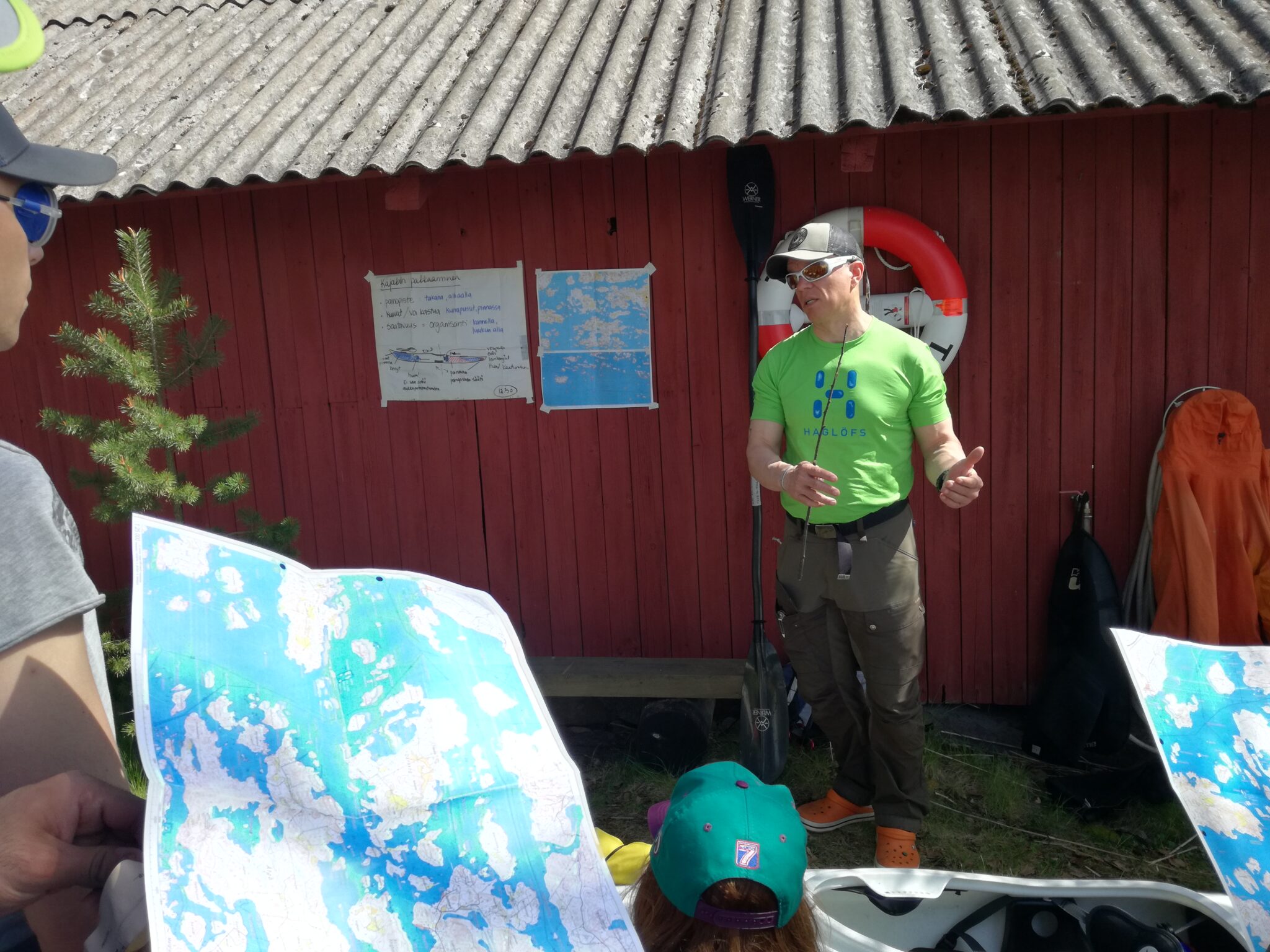 Hands-on courses offer excellent opportunities for practical language learning. Photo: Kim Lindblad.
In planning the Finnish learning path pilot, we have chosen to focus on the autumn 2025 intake, giving us the opportunity to follow the same group of students from the very first weeks of their studies almost through to graduation, as we test and evaluate our language-integrated learning model.
Language learning opportunities are integrated into the degree programme throughout the first year. As part of Career Planning and associated coaching days, students on the Finnish language learning pathway will receive support in designing a personal study plan for learning Finnish. In Community Educators´ Professional Competencies, we’ll practise simple greetings, everyday language and key vocabulary and provide opportunities for our learners to test-out their new skills interacting with native Finnish speakers.
We have also built a network of internship places that are committed to supporting our students’ language learning during their first internship period. These internship partners will receive training, guidance and support materials from the BiEd project. Based on these experiences, we aim to develop a language-integrated practical training model.
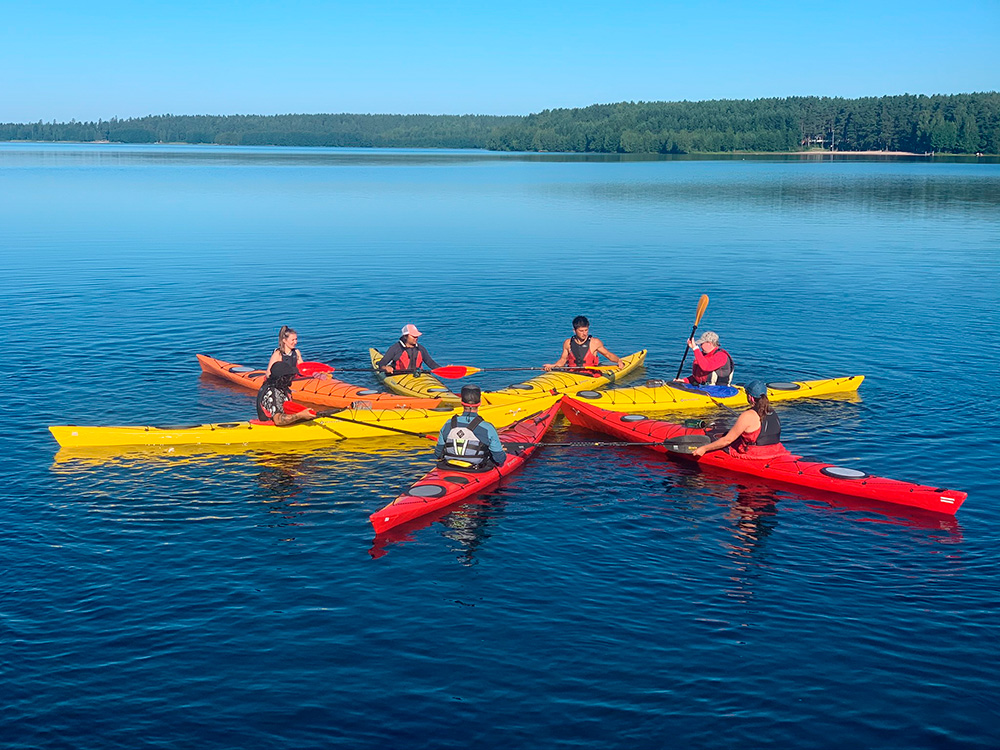
In the spring term, as students master basic skills in climbing, kayaking, outdoor equipment maintenance and instructing outdoor activities, they will also expand their Finnish repertoire, getting to grips with the terminology of the field and becoming familiar with the linguistic demands of the profession of outdoor adventure educator. The practical, hands-on pedagogical approach and extensive face-to-face teaching and small group interaction provide a safe and supportive setting for learning language.
During the academic year 2025-2026, our teaching staff will also receive training in language-integrated teaching and support in planning the pedagogical implementation.
Author: Tero Lämsä, Senior Lecturer / Head of Degree Programme, Adventure and Outdoor Education.
Published: September 2, 2025 by Humak University of Applied Sciences.
SOURCES:
Henriksson, J. & Pohjanmäki, T. 2024. Venturing into the World of Work: Humak Adventure Education Graduate Outcomes Survey. Humak University of Applied Sciences.
Lauronen, T. 2025. Millä hinnalla? Kansainväliset korkeakouluopiskelijat Suomessa. Opiskelun ja koulutuksen tutkimussäätiö Otus sr.
Lu, W. & Everson Härkälä, T. 2024. International student experience of employment integration in Finland. Research in Comparative and International Education. Sage Publications.
Välimäki, M., Pitkänen, V., Niemi, M. & Veijola R. 2023. Kansainväliset osaajat ja Suomi: Mielikuvat, kotoutuminen, työelämä ja tuen tarpeet. Kansainvälisten osaajien Suomi –tutkimushanke.