Pilot mother project
The pilot mother project develops peer group activities that support migrant mothers’ agency and pathways to education and employment.

duration
1.1.2024 – 31.12.2026
area
Valtakunnallinen
funder
EU: ESR+ -rahoitus
humak’s part of the total budget
229 290,00 €
Rahoittajat
lead partner
Humanistinen ammattikorkeakoulu
partners
Peer Support
Pilot mother project is a three-year project co-funded by the European Union. The project develops and tests group activities based on peer support. The Pilot mother project was created in response to the need to reach migrant mothers who are staying at home and to support their opportunities to enter working life. The purpose of the activities is to strengthen mothers’ inclusion, active agency, and employment opportunities.
Through peer group activities, women gain opportunities for activities outside the home, peer support, and networks, as well as the chance to familiarize themselves with different models of employment. The groups also offer opportunities to maintain and practice the use of the Finnish language in everyday situations. Participation in the activities strengthens the mothers’ sense of inclusion and agency.
The project is national in scope, and the activities are being piloted in the Turku region. The Pilot Mother project is part of the national Partnering in Integration (Kumppanina kotoutumisessa) coordination project.
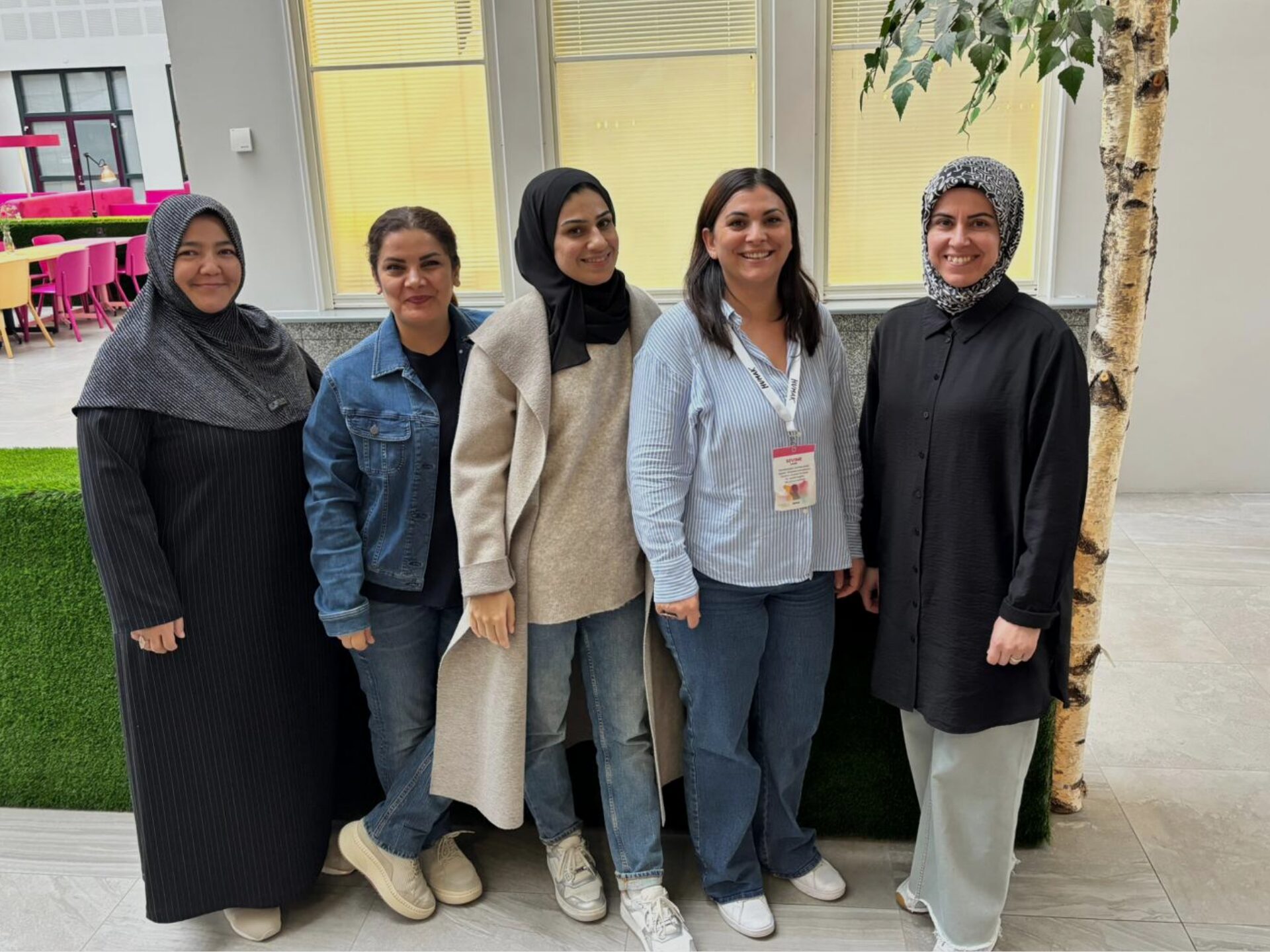
The project is implemented by Humak. In addition to the project manager and an expert, so called pilot mothers work in the project. The pilot mothers work as peers bringing international expertise, local networks, and experiential knowledge to the project. Humak contributes its existing networks and expertise in supporting migrants on their pathways toward working life. In addition, the mothers participating in the groups are able to influence the planning and implementation of the activities themselves. In this project, mothers are actors in their own right—not merely recipients of services.
Objectives
The objectives of the project are to:
1) Identify and train pilot mothers and build an operational model for pilot mother activities.
2) Support migrant mothers, together with project staff, in finding services and developing working-life readiness through peer support.
3) Enable encounters between employers and mothers. This facilitates employment, increases understanding of working life, and lowers employers’ recruitment thresholds.
4) Identify and compile new types of employment models for stay-at-home mothers.
5) Develop operational models in close cooperation with authorities and organizations supporting career planning, while actively communicating within these networks.
6) Collect and disseminate good practices nationally in close cooperation with integration networks.
7
pilot mothers
8
piloted groups
45
mothers reached
Interview with pilot mothers
Project Manager