Bringing Meaning and Beauty to Europe’s Green Transition
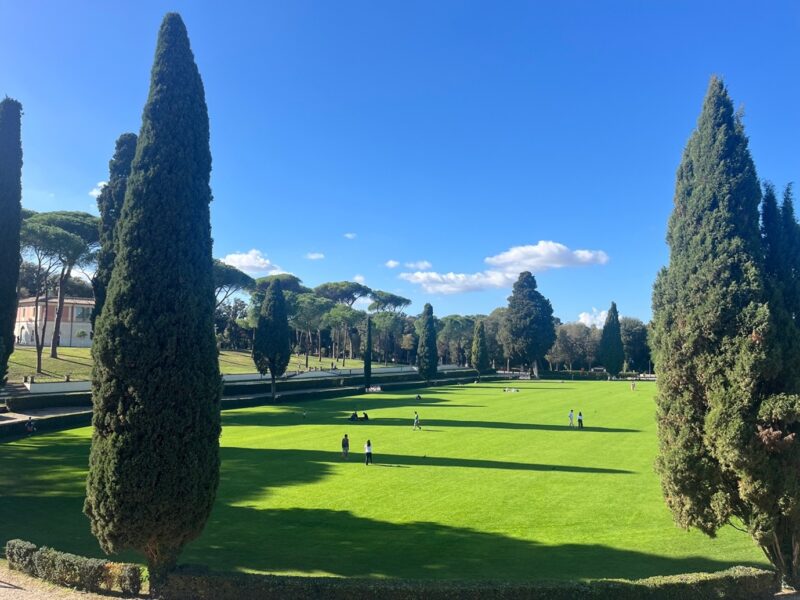
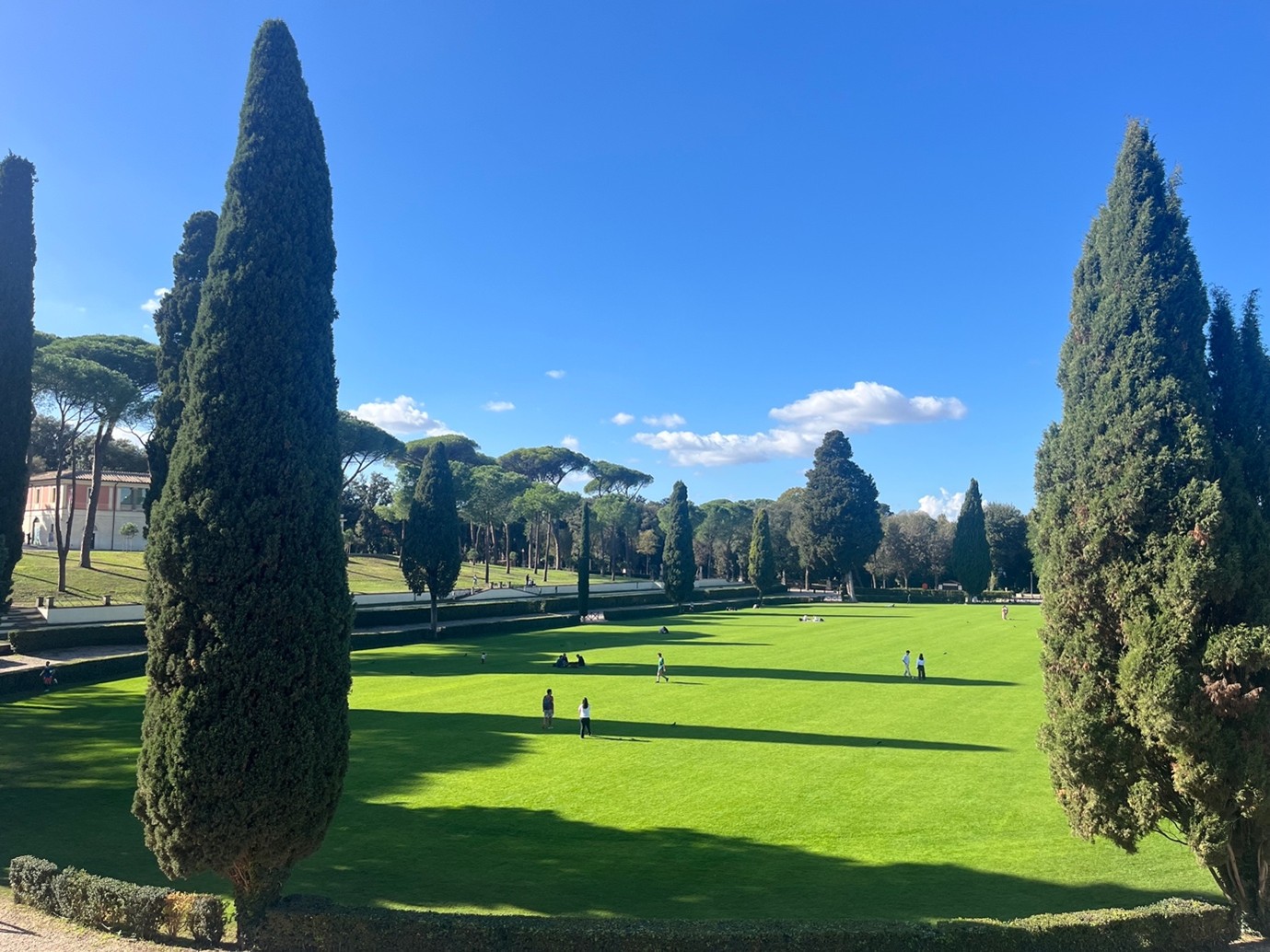 Grand public spaces like the Great Lawn of the Piazza di Siena, Villa Borghese, Rome are sites of shared aesthetic experience. Image credit: Marcin Poprawski.
Europe’s Green Transition has reshaped energy, mobility, housing and digital infrastructure for over a decade. But without concerted integration, these systems can become fragmented, which puts communities under pressure and can leave people disenfranchised. Enter the New European Bauhaus: a values-led policy and funding initiative to weave these technical shifts into something meaningful, liveable and beautiful.
This article explains how the New European Bauhaus values framework inspired a new international project led by Humak University of Applied Sciences.
Rather than replacing the technical and regulatory systems of the Green Transition, the New European Bauhaus (NEB) offers a unifying set of values – sustainability, beauty, inclusion. These values bring societal change into meaningful dialogue with everyday lived experience, placing culture, participation and experiential quality on equal footing with carbon targets and renovation standards.
This is where Humak’s capabilities matter. Our new project, AGATE (Aesthetic Agency for Green Transition), is a Humak-led international response to the core question posed by the NEB: How do we make Europe’s environmental transformation not only technically sound but also culturally meaningful, inclusive and rooted in everyday lived experience?
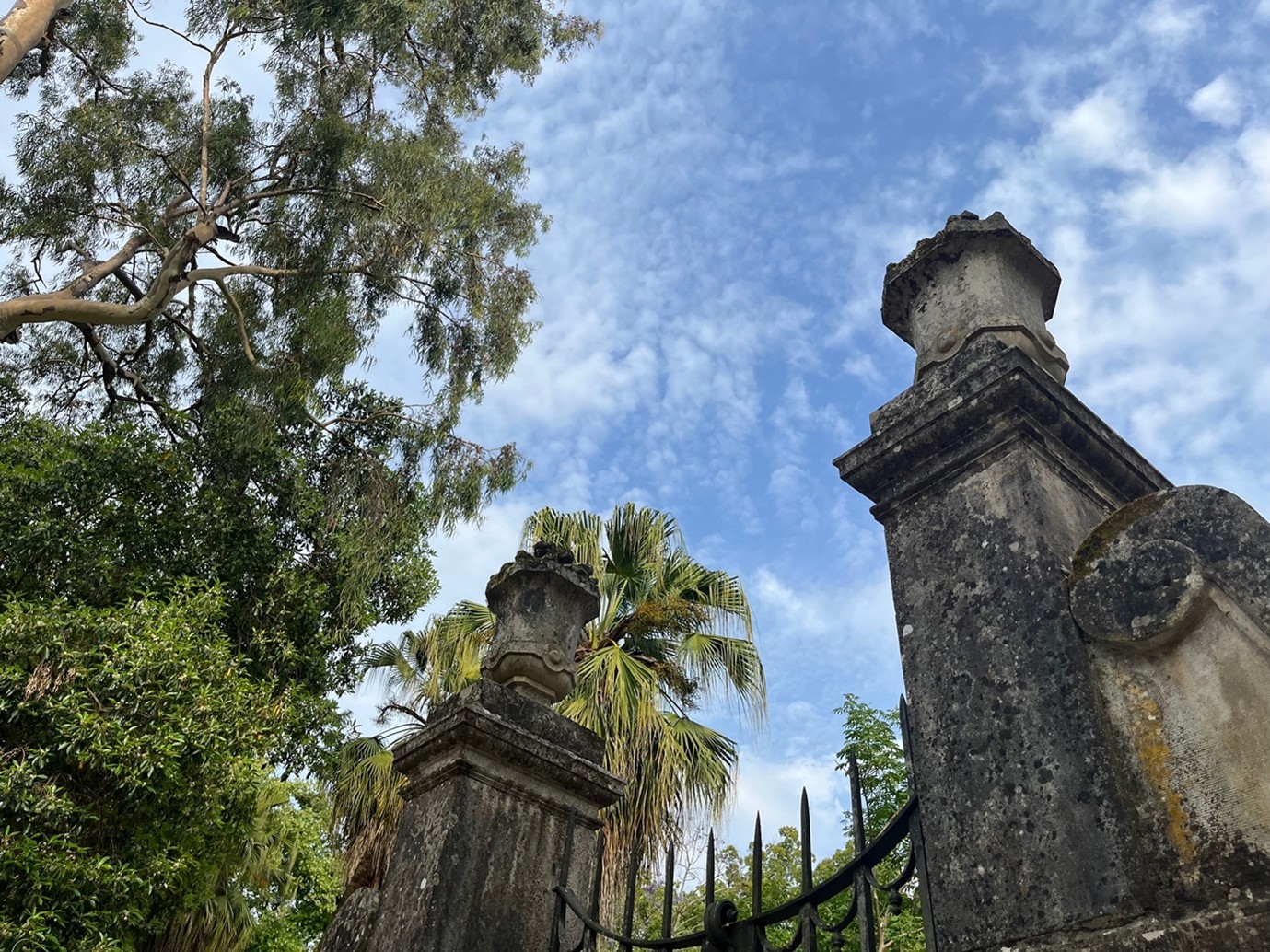 Heritage infrastructure like this iron and limestone gate at the Botanical Garden of the University of Coimbra opens pathways between history, ecology and participation. Image credit: Marcin Poprawski.
Cultural Expertise as Infrastructure
Humak brings uncommon capabilities here. Our expertise in cultural management, inclusive participation pedagogy and land-art activism gives us a world-class practical understanding of how people build meaningful relationships with places and each other. These relationships, importantly at times of rapid societal and political change, make society more resilient, more inclusive and more democratic.
Festivals, community arts and site-specific practices create temporary spaces of inclusive, non-hierarchical participation where new relationships and sensibilities can emerge. Project AGATE extends this approach to green infrastructure, arguing that communities should not be expected to passively accept reshaped landscapes; rather, we should help communities develop the capacity to co-create and sustain them.
Aesthetic Agency as Civic Competence
This is where the concept of aesthetic agency brings our approach into focus. Aesthetic agency means the ability to notice, interpret and care for the look, feel and atmosphere of shared spaces. This is the civic competence to register what feels harmonious or discordant, and to create something more beautiful in response.
This approach shifts greening initiatives away from consultation theatre toward genuine co-stewardship. From restored wetlands, renewed parks, and low-carbon urban corridors to allotments, gardens and even window boxes, all our green spaces flourish when people feel substantive connection to them. AGATE develops creative methods that help residents express what feels right or wrong in their everyday surroundings, and how everyday aesthetic judgements can inform more equitable and ecologically sound decisions.
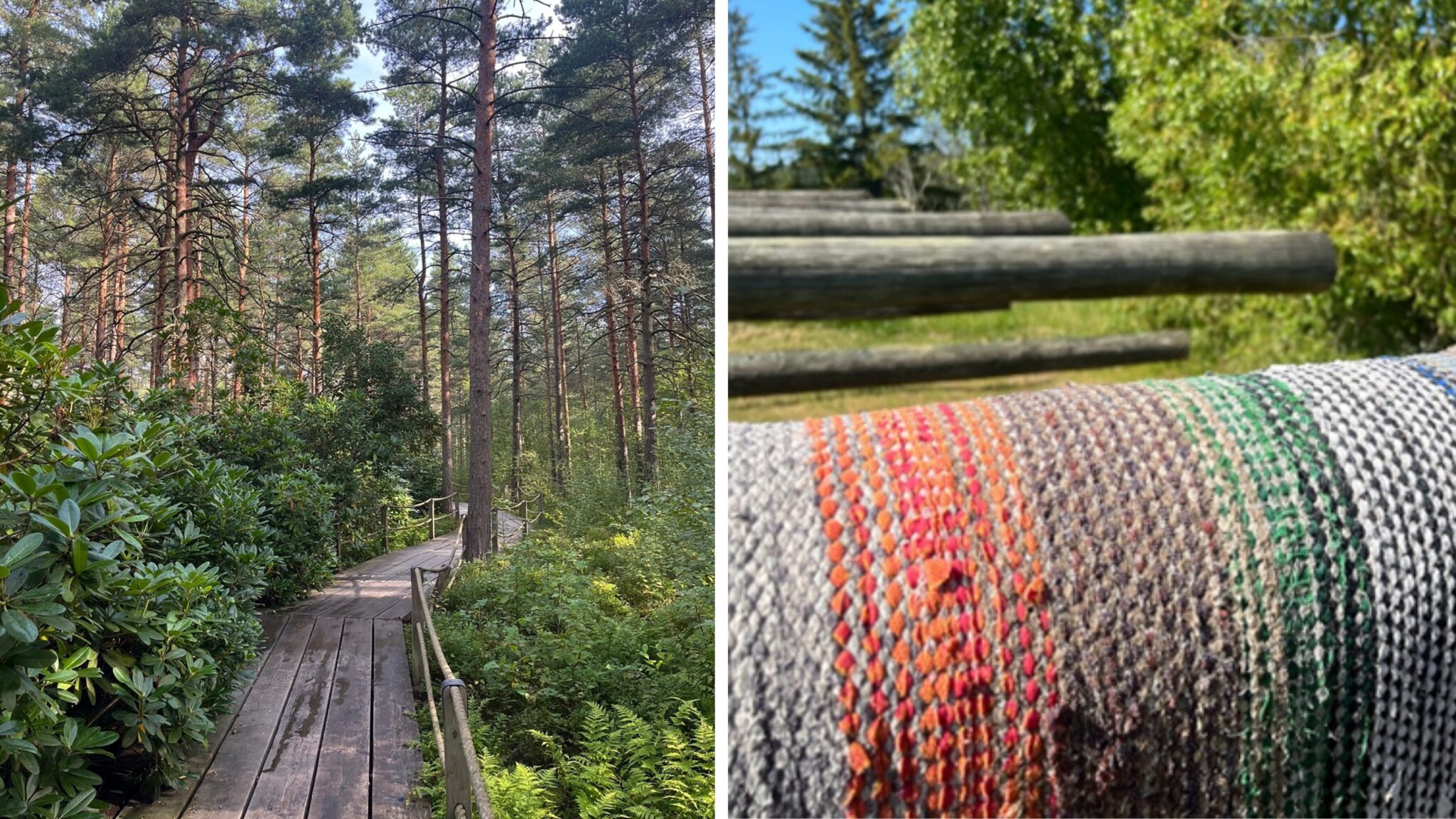 Left: Wooden walkway in Haaga Rhododendron Park opposite Humak’s Helsinki Campus. Right: A classic hand-woven rag rug dries in the sun at a traditional outdoor washing place in Turku. This rug was woven from old clothes by Laura Päiviö-Häkämies at a local municipal weavers’ club. Everyday interventions like these make aesthetic stewardship visible across scales. Image credits: Laura Päiviö-Häkämies, Marcin Poprawski.
AGATE’s radically transdisciplinary approach brings together research institutions, art museums and botanical gardens. The point is to address a wicked problem with wicked means. Cross-system knowledge and action. This is why we chose to focus on gardens: familiar to everyone, but places of extraordinary sociopolitical dynamism where multiple discourses intersect around material practice. This is how citizens and communities can become authentic agents of the green transition.
From Policy to Practice
By aligning Humak’s cultural expertise with NEB values, AGATE addresses the gap between policy ambition and ground-level experience. The project positions participatory cultural practice not as supplementary or nice-to-have but as foundational for lasting environmental transformation.
This matters strategically. European funding increasingly emphasises values integration, asking not just what a project aims to achieve but why it matters. In this context, Humak’s ability to operationalise beauty, inclusion and participation becomes a competitive advantage.
AGATE demonstrates what this looks like in practice: research and action that treats aesthetic experience as an important civic skill that can be observed and developed; methods that treat communities as knowledge producers rather than passive consultees; and frameworks that make cultural participation legible to environmental policymakers.
This alignment of values and policy helped move AGATE from an early concept to an eleven-country consortium spanning the EU, UK and Brazil. The idea travelled quickly because its purpose was clear, the framing resonated across sectors, and partners could immediately see how their work connected to the wider NEB remit. Our project consortium of research institutions, cultural organisations and botanical gardens constitutes a robust values-led network that will carry forward a unified wider programme of research beyond this single project cycle.
The Green Transition succeeds when people recognise themselves in the future being built around them. Technical systems can be designed, installed and measured, but without social trust and shared ownership, they struggle to take root. But when communities feel connected to their environments, green infrastructures become lived spaces rather than imposed solutions. This is the difference between transformation that endures and interventions that fade once the funding cycle ends.
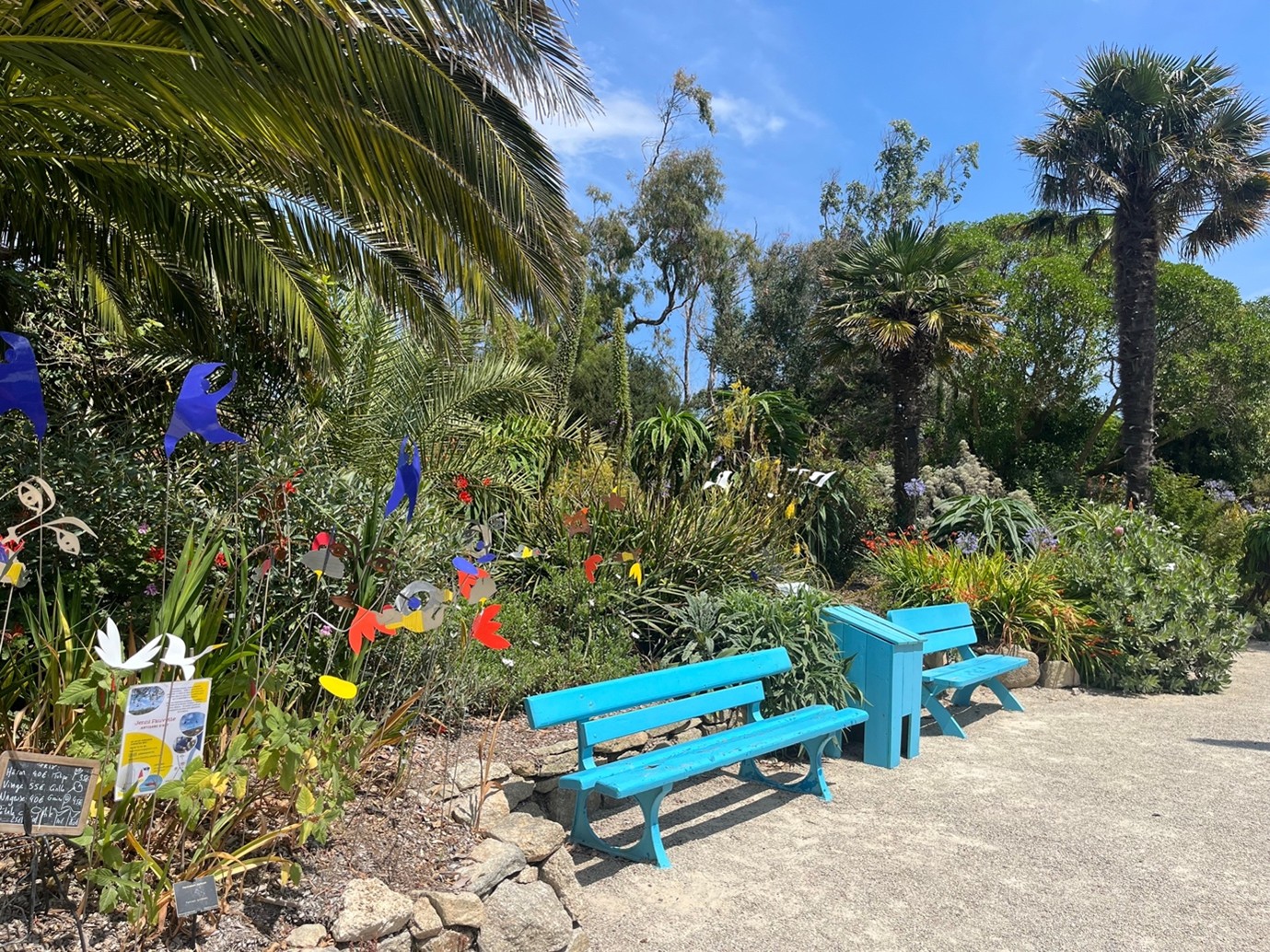 A place to think: botanical gardens like the Jardin Exotique et Botanique de Roscoff, Brittany are sites where communities develop knowledge and stewardship together, helping transformation to take root. Image credit: Marcin Poprawski.
Horizon NEB Project AGATE was developed by Marcin Poprawski, Laura Päiviö-Häkämies and John Weston.
Author: John Weston, Grant Writer, Humak University of Applied Sciences, ORCID
Publication series: Humak Harticles
Publisher: Humak University of Applied Sciences
Publication date: 5.12.2025
Publications (Articles, Blogs & Podcast)
- Article

- Creative Field Entrepreneurship
The Window to India Is Open: Why Focused Strategy Defines the Next Breakthrough in the World’s Fastest-Growing Music Ecosystem
- Article

- Research and Development
- Resilient Societies
Crises as Catalysts for Change: The Foundations of the Resilient Societies Research Programme
- Web publication

- NGO Work
Ever Wanted to Be an Explorer? – Tikkala Schoolchildren Learning at the Struve Geodetic Arc at Oravivuori Station Point
- Web publication