
Venturing into the world of work: Humak Adventure Education Graduate Outcomes Survey
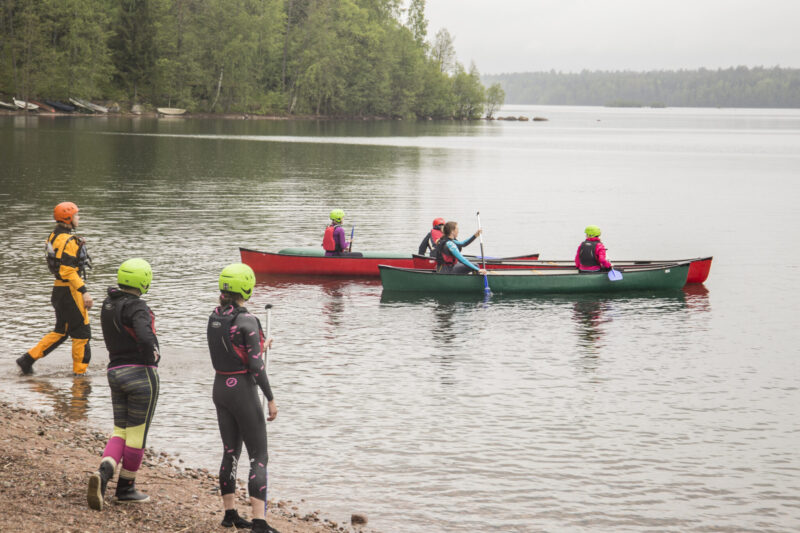
Humak University of Applied Sciences has been training community educators specialising in Adventure Education since 2018. Our degree programme is grounded in experiential learning and activity-based methods that support the growth, development, wellbeing and work of individuals, groups and communities.
At the heart of the programme is a multidisciplinary theoretical framework that is brought to life in diverse, authentic learning environments, including lakes, forests, the fells of Lapland and other natural settings. Taught in English, our degree programme in Adventure and Outdoor Education is also ideally suited to international students, who make up more than half of our adventure education intake.
In June 2024, Humak carried out its own employment outcomes survey of programme graduates. The National UAS Career Monitoring Survey, which targets university leavers five years on from graduation, has yet to produce data on career outcomes for adventure educators. At Humak, adventure education student outcomes were last examined in a 2022 report, mainly following students who had specialised in Adventure Education or completed open UAS studies (Tilev, 2022).
The current survey sought to chart graduate outcomes including employment status, career landscape and career satisfaction to date. The survey was sent to 36 former adventure education students who graduated between 2018–2024, of whom 18 responded, a response rate of 50 %. There were four respondents with an international background. The survey also sought to investigate the career plans and employment status of adventure education students in the final stages of their studies. The response rate of this group was lower, with only a third of students (N=7) responding.
In this article, we highlight the main findings of the survey. In interpreting the results, we need to keep in mind the small number of respondents. It is also important to recognise that the graduates in this survey entered the workforce between one and three years ago, hence the prevalence of entry-level duties characteristic of early-career roles in the field. In time, we should have a clearer picture of the employment status and salaries of graduates with more extensive industry experience compared to new graduates.
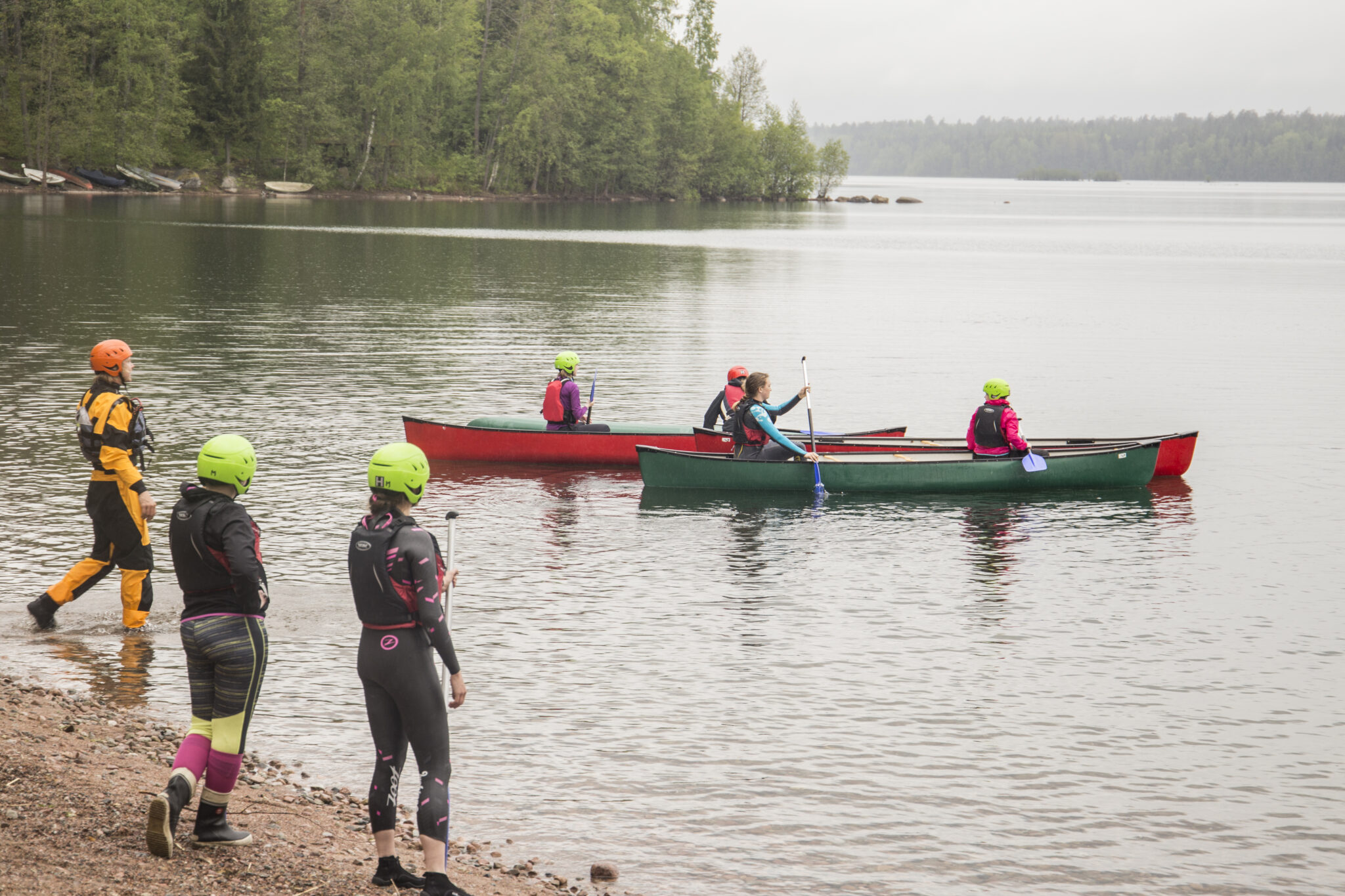 Adventure Education students put theory into practice right from the start with a series of adventures and expeditions, including hiking, kayaking, summer and winter camps and winter sports. Drawing on experiential learning and activity-based approaches, students learn to plan, organise, deliver and evaluate safe adventure education activities for different target groups in a wide range of settings. Photo: Emilia Reponen
Career satisfaction quite high among Adventure Educators
The survey paints a positive picture of employment outcomes for Adventure Education graduates overall, with 72 % (N=13) of respondents at least quite satisfied with their careers since graduation and international graduates all at least quite satisfied. Job satisfaction was associated with factors such as meaningful work, a job that reflects your qualifications, good working conditions, perceived success as an entrepreneur and opportunities for professional development.
61 % (N=11) of respondents had been continuously or mainly in employment since graduating. None of the respondents reported having been continuously unemployed since graduating. The survey, however, revealed that fixed-term employment contracts are common in the sector. A third of respondents reported usually working under a fixed-term contract. This echoes the findings of Tilev (2022). Entrepreneurship and freelancing are also strongly represented in the data, at almost 30 %.
The survey results show adventure educators are most commonly employed by small and medium enterprises. None of the graduates were working primarily in the public sector or in higher education. The majority of respondents (83 %, N=15) had worked for between one and three employers since graduating (including their own firm for respondents who were self-employed).
Close to 40 % of respondents (N=7) reported a monthly income below 2 000 €. A further third reported earning, on average, between 2 000 € and 2 499 € per month. Just over one in ten reported a monthly income of 3 000–3 499 € or above. None of the reported average monthly salaries exceeded 4 000 €.
Graduates’ skills widely applicable
Adventure educators are employed in a variety of roles that emphasise the adventure education approach. In guided tours and training, these skills are directed towards activities such as leading groups, and hiking and snow safety training. Some respondents had held youth sector roles, as youth leaders or facilitators in projects incorporating adventure education as a central pedagogical method. Some had freelanced specifically with young people. Adventure educators have also held teaching roles, undertaking instruction and curriculum development at an educational institution
Listed below are the sector-specific professions and roles mentioned in the survey results.
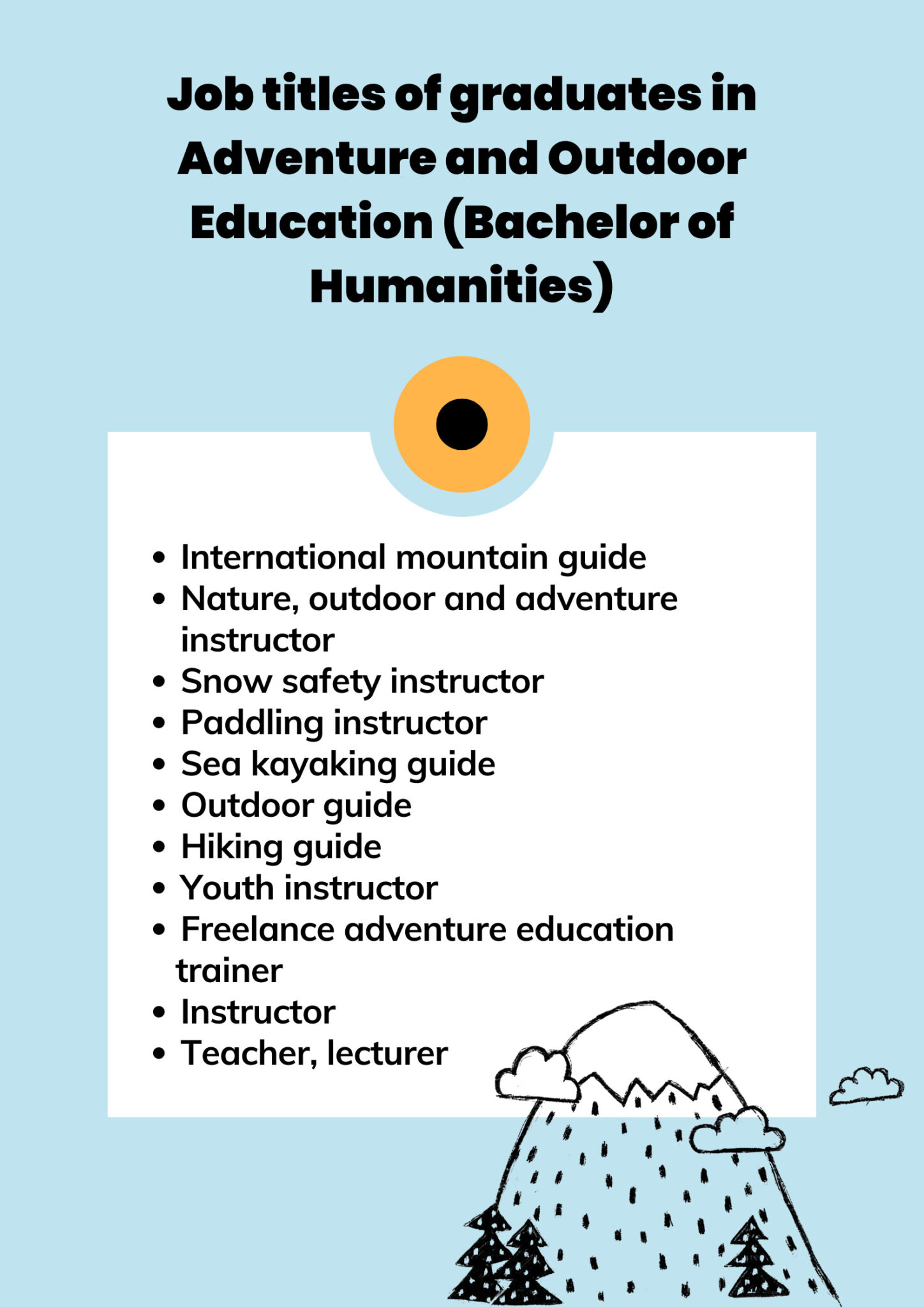 The survey found adventure educators work in a wide range of professions and roles. Image: Johanna Henriksson
Although just under a quarter of respondents have worked in the industry since graduation, half have utilised the skills they gained from their degree professionally, applying their expertise in outdoor pursuits and youth mentoring in their work with children and young people. Entrepreneurship also provides opportunities for graduates to leverage the skills they gained during their studies. These skills also find application in tourism and commerce and a variety of customer service roles. Of the graduates who responded, three had not worked in the sector at all.
Respondents’ jobs in the field were based primarily in Uusimaa (67 %), Lapland (33 %) and abroad (33 %). Graduates also found industry jobs in North Karelia, North Ostrobothnia, Southwest Finland and Kymenlaakso. International graduates have been employed in the industry abroad including in Germany and Austria.
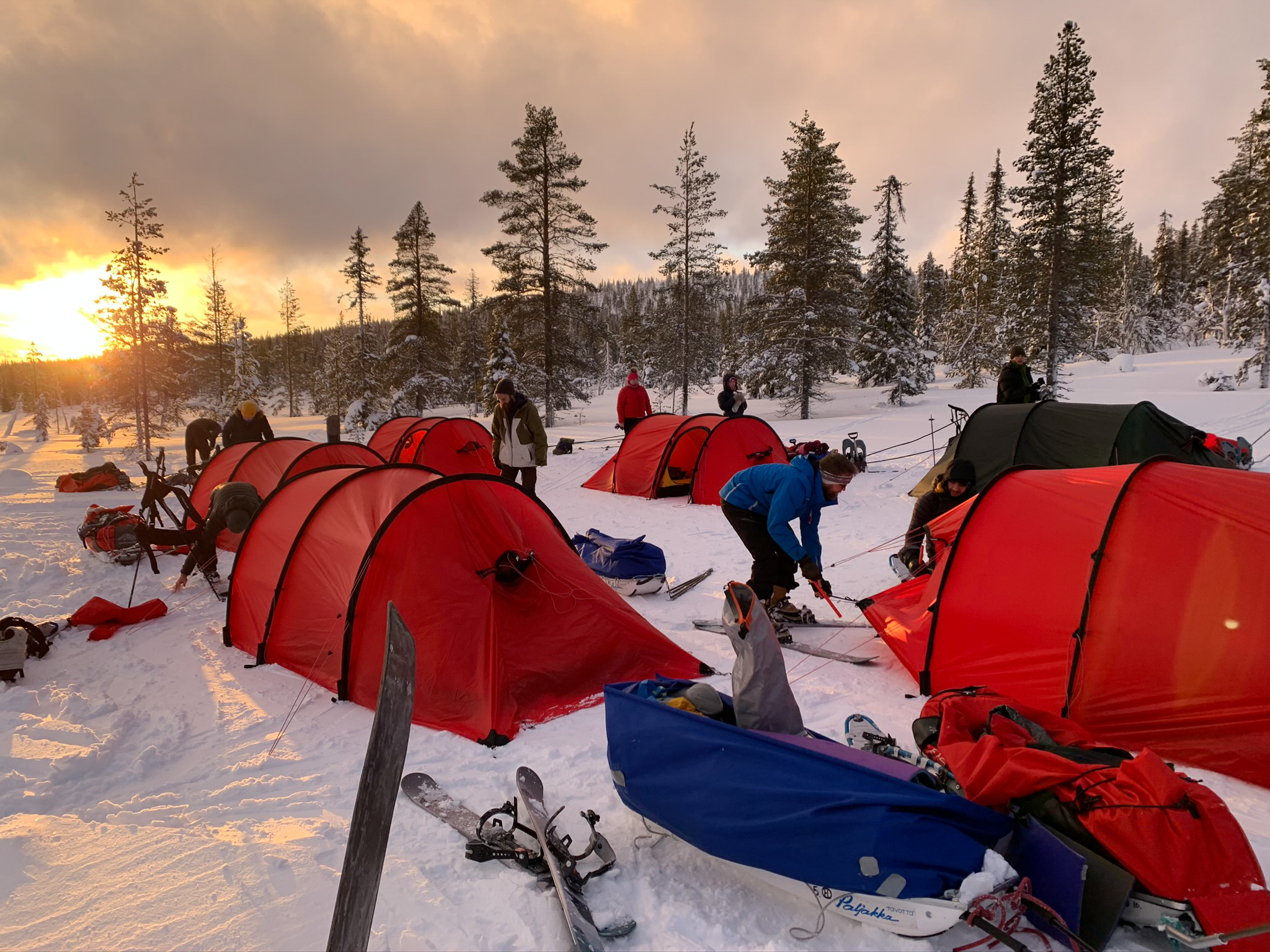 Practical courses are important in developing students’ community engagement and adventure education knowledge. Photo: Sini Lahti
Experiencing the sector during your degree
The survey showed students often gained an introduction to industry roles during the course of their degree. Almost half of the final year students who completed the survey reported working full-time in a role related to their studies and as many again reported working part-time. Others benefitted from the skills they gained during their studies, which enriched their approach to work and brought added value to their work with clients.
A more detailed snapshot of the professional roles within adventure and outdoor education highlights the diversity of the industry and its expertise. Key roles involve leading guided tours and coordinating activities, such as Northern Lights expeditions and paddling trips. Technical expertise is also important in the sector, encompassing familiarity with equipment and tools and ability to train colleagues.
Job titles in the sector range from outdoor specialist to project lead and youth camp leader. Roles such as outdoor guide, kayaking guide and wilderness guide are also common. This diversity reflects the broadness of the field of adventure and outdoor education and the opportunities it offers.
Career path challenges: seasonal work, language skills and competition for permanent roles
Adventure education graduates have faced plenty of challenges navigating their career paths and the labour market. The nature of seasonal work, particularly in the tourism sector, creates uncertainty, as finding a job between seasons can be difficult and individuals are often forced to move around due to the distances involved.
Many respondents observed that part-time work was available, but that it was difficult to find long-term roles aligned with their qualifications and offering sufficient hours. Employability was hampered by lack of language proficiency, particularly Finnish and Swedish. Expected gains in language skills development during the programme were not always achieved.
For entrepreneurs, finding partners and maintaining profitability have presented the most significant challenges. Competition for permanent positions is fierce, and employers don’t always recognise the expertise of professionals in the field. The combination of low salaries and considerable responsibility creates additional challenges. Some respondents had undertaken gig-work, which can be precarious and poorly paid but also demanding.
Student career plans
Of the students in the final stages of their degree, almost half did not yet have a clear plan for what they would do after graduation. Some students intended to continue to develop within their current workplace and others planned to start a business or become self-employed. Some respondents planned to undertake further studies.
Students who had a clear career plan intended to apply for adventure and outdoor education jobs or guiding positions. Some also planned to incorporate adventure education approaches in child protection or project work.
Over half of students planned to seek work within Finland (e.g. in the east or north) after graduating from Humak. Just under a third of students had set their sights on working overseas. A further third was not yet able to say.
Training options to support professional development among adventure educators.
Individuals working in the adventure and outdoor education sector have actively upskilled by undertaking further training to meet the demands of their careers and to develop in their profession. Almost 40 % (N=7) reported receiving additional training after graduating from Humak. The three main reasons for pursuing further training were: skills development, career advancement and difficulty finding work. Respondents had undertaken a variety of training across a broad range of areas including first aid, climbing, and kayaking instructor training. Respondents had further developed their skills in experiential learning, project work and tourism sales.
Many respondents felt that they would require further education in the future, such as a master’s degree, educational qualifications or postgraduate studies in social work or community education. Some planned to switch fields, if the employment situation did not improve, planning to study for a new career or return to a previous field.
There was significant interest in further training within outdoor and adventure education, including guide training, advanced paddling and climbing skills, renewal of first aid qualifications, and undertaking therapy qualifications. Marketing and Finnish language proficiency also emerged as areas for further training.
Areas of development within the degree: from pedagogy to entrepreneurial skills
Graduates of the programme highlighted several areas for development within the degree, such as pedagogical skills and teaching methods. Some felt the programme focused more on adventure than adventure education. The importance of the educational perspective is also raised in Tilev (2022). There is room for development in how students are taught methodologies for working with children and young people. Students suggested a need for basic psychology to be included within the programme, because of its significant impact on education and on how we engage with others throughout the whole adventure education sector. Tilev (2022) also identifies pedagogical skills as a key competence for future adventure education professionals.
In addition, workplace skills and career coaching are key areas where graduates would have appreciated more support. They would welcome more guidance, including support to identify and market their own strengths and information on further training opportunities. Students also expressed a desire for higher quality mentoring and coaching, and more effective guidance sessions and communication from academic advisors.
Graduates felt entrepreneurial skills were important, particularly in terms of understanding the demands of freelance work. Self-employment and freelancing were seen as becoming increasingly important.
Individual comments also suggested specialising in specific technical adventure skills to ensure mastery and proposed adventure therapy and emotional intelligence skills for group leadership, self-awareness and reflection skills, IT skills, research and development skills and improving Finnish and Swedish language skills to improve employment prospects.
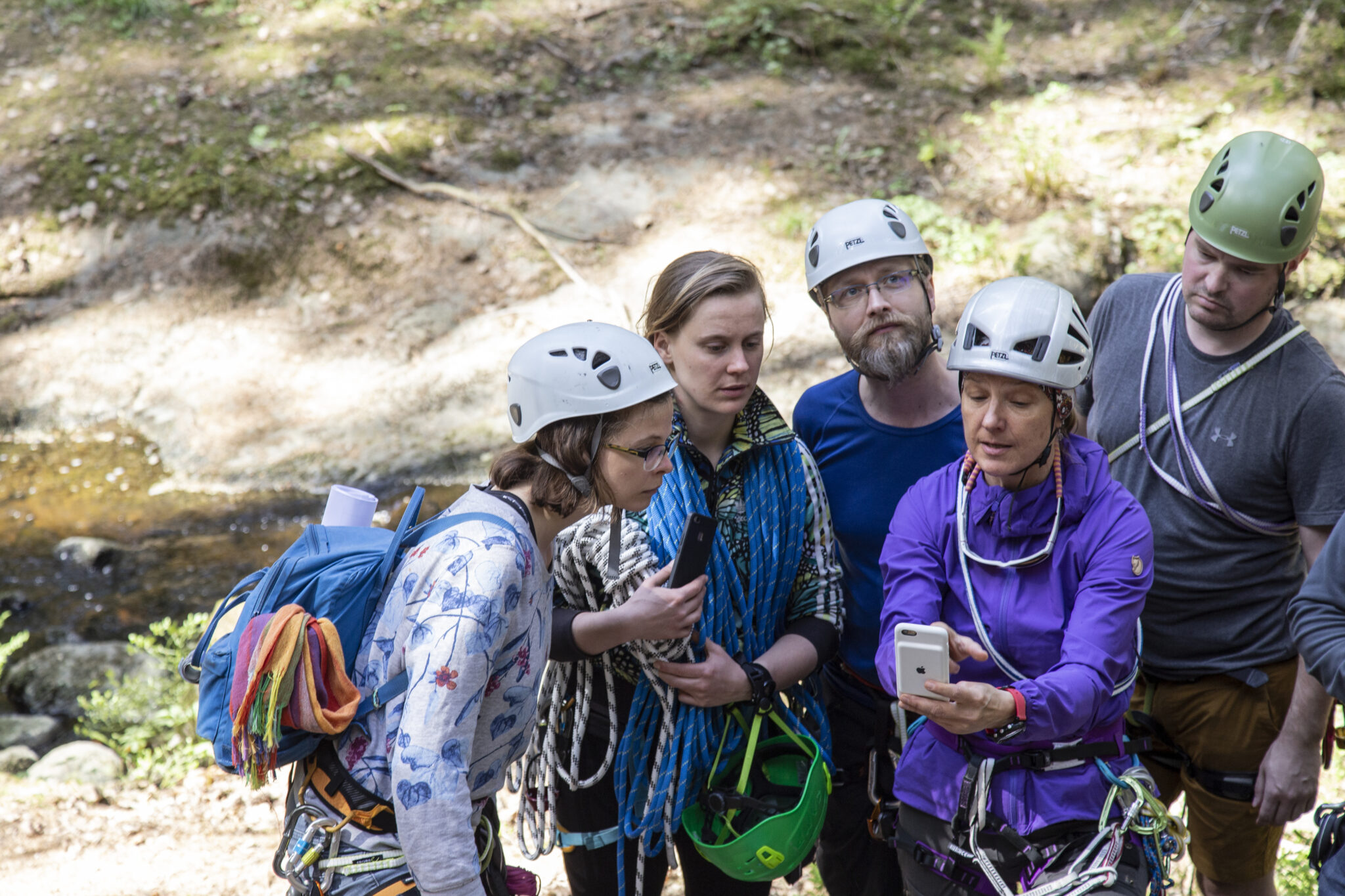 During the programme, students develop skills in pedagogy, leadership, social skills, environmental awareness as well as technical and safety skills. As part of their Community Education studies, students also explore the structures of the welfare state, models of preventive work, equality and diversity promotion and entrepreneurship. Photo: Emilia Reponen
Areas for development and future orientations for Adventure and Outdoor Education
The survey shows that the majority of adventure education graduates are satisfied with their career paths and have been able to use the skills they have acquired during their studies in a variety of jobs. At the same time, however, it is clear that the sector also faces challenges, such as the prevalence of fixed-term contracts, competition for permanent jobs, part-time work and also the demands of entrepreneurship.
The results of the survey provide valuable feedback for the development of qualifications, and provide guidelines for identifying future training needs.
Looking to the future, we need to consider how we can better support the employment prospects of international students in Finland by promoting industry connections during the programme and by providing networking opportunities locally.
The scope of our Finnish and Swedish language offerings should be increased, so students can develop their language proficiency naturally alongside their degree. Work placements and projects can provide students with opportunities to participate in Finnish work environments and further enhance their employment prospects after graduation.
Authors:
Johanna Henriksson (M. Ed.), Specialist, Administration, Humak University of Applied Sciences
Titta Pohjanmäki (Lic. Ed), Administrative Manager, Humak University of Applied Sciences
Sources
Tilev, K. (2022). Yhteisöpedagogien työmarkkinat, muuttuvat toimintaympäristöt ja tulevaisuuden osaamistarpeet. Humanistinen ammattikorkeakoulu julkaisuja, (137).