Whose City? On Overtourism and the Disappearing Sense of Community
European cities and village communities are dealing with a double-edged sword. Cultural events and tourism bring vitality and visibility, but at the same time they can transform cities in ways that local residents never wished for or planned.
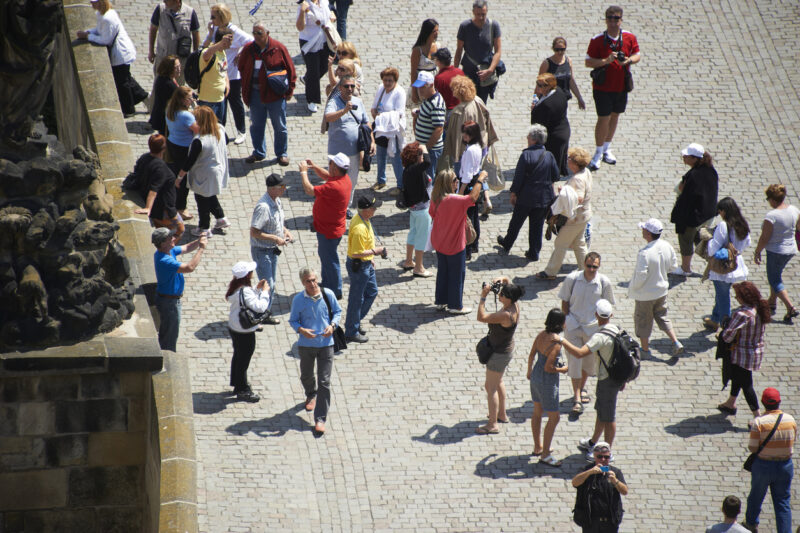
When your city fills with tourists during festival season or the peak travel months, what changes? And who gets to decide what your hometown is allowed to become?
European cities and village communities are dealing with a double-edged sword. Cultural events and tourism bring vitality and visibility, but at the same time they can transform cities in ways that local residents never wished for or planned. This tension between economic growth and community well-being has only intensified in recent years.
When Places Turn Into Backdrops
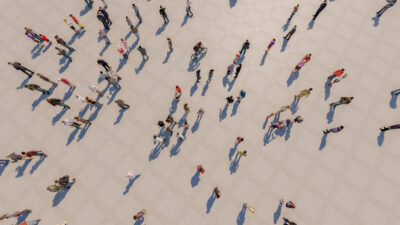
The phenomenon is familiar across Europe: in summer, Edinburgh or Barcelona overflow with tourists, and in Rovaniemi the Santa Claus business shapes the city’s image year-round. Small villages, such as Bled in Slovenia, struggle with millions of visitors. Everyday life for locals changes fundamentally—homes become short-term rentals, and young families are forced to move outside the city as rent prices rise. Shops sell souvenirs instead of daily essentials, and local services disappear to the outskirts of city centres that have turned into tourist zones.
In many cities, locals avoid their own city centre during the tourist season. They no longer feel they belong to their neighbourhood when public spaces are designed around the needs of visitors. Festivals and events do bring economic benefits—but for whom? Often the cultural venues and community spaces used by locals receive less attention as resources are channelled toward international programming.
Social media further fuels the phenomenon. When a place goes viral on Instagram or TikTok, tourist flows can surge rapidly and unpredictably. This happened, for example, in Roccaraso, Italy, where a single influencer’s video completely transformed life in the small mountain village. Local infrastructure cannot withstand sudden change, and the community’s daily life suffers. At the same time, local identity and culture are easily overshadowed by tourist expectations.
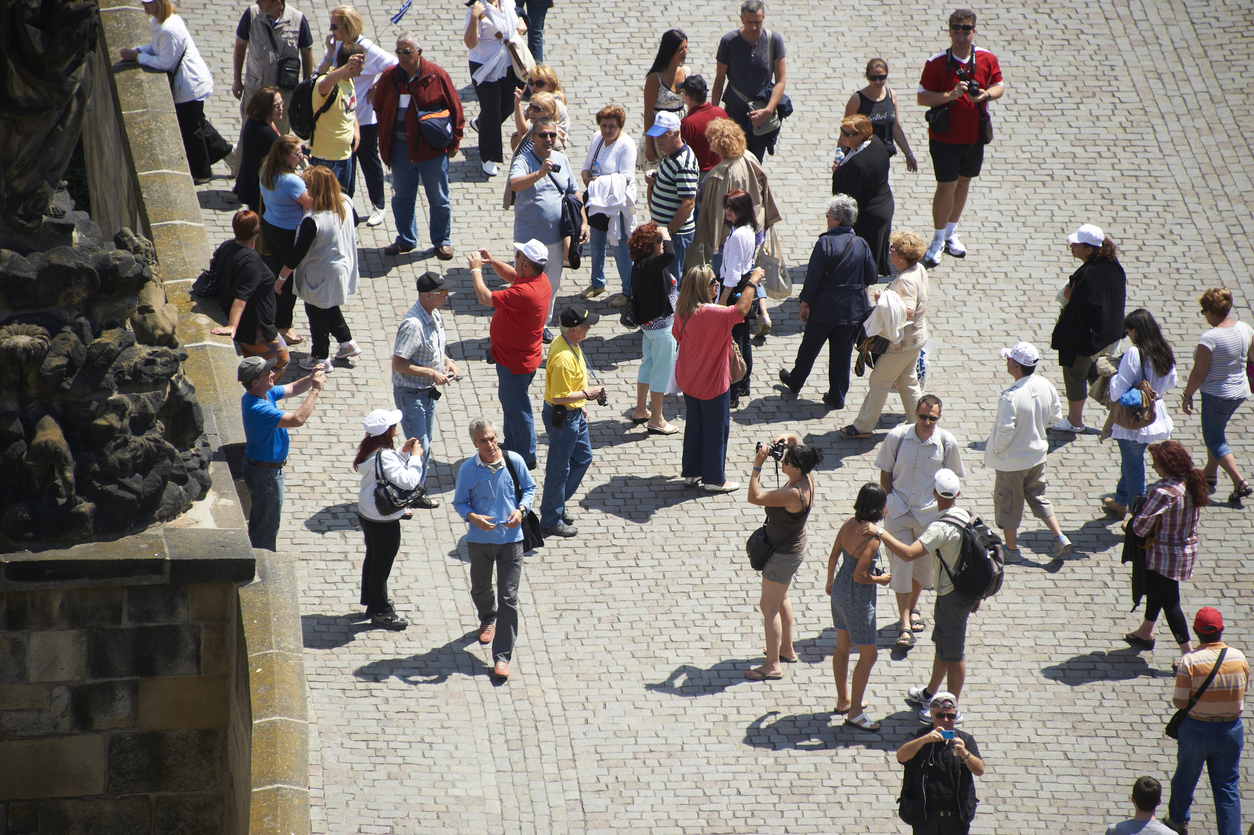 Istock. PRAGUE, CZECH REPUBLIC – SUMMER 2014 : Pedestrians and vendors (tourists) walking on the Charles Bridge, Vltava river, Prague the capital city of Czech Republic.
Toward Human-Centred and Sustainable Culture
But what if we could think differently? What if, when planning cultural events and tourism, we first asked local communities: What do they need? What kind of culture do they want to celebrate? Who is public space really for? Participatory methods and art-based co-creation could help bring local voices into decision-making.
In the era of the climate crisis, we must also ask whether a tourism model built on constant growth is sustainable. Air travel, energy consumption at events, and single-use plastics burden the environment. Could we create space for both locals and visitors in a way that respects everyone—and the planet? Solutions are slowly emerging: sustainable tourism models, community-centred planning, and circular economy practices are steps in the right direction.
The answers are not simple, but the conversation must begin where life happens—from within local communities. Only by truly considering the perspectives of year-round residents can we build culture and tourism that are both sustainable and humane.
Author:
Nina Luostarinen, RDI Senior Specialist, Humak University of Applied Sciences, ORCID 0000-0003-0777-2858
Publication date: 17.12.2025
Publication series: Humak Harticle
Publisher: Humak University of Applied Sciences
Publications (Articles, Blogs & Podcast)
- Article
- Creative Field Entrepreneurship
The Window to India Is Open: Why Focused Strategy Defines the Next Breakthrough in the World’s Fastest-Growing Music Ecosystem
- Article
- Research and Development
- Resilient Societies
Crises as Catalysts for Change: The Foundations of the Resilient Societies Research Programme
- Web publication

- NGO Work
Ever Wanted to Be an Explorer? – Tikkala Schoolchildren Learning at the Struve Geodetic Arc at Oravivuori Station Point
- Web publication