Becoming a Professional, part 4: Cultural Manager (Bachelor’s Degree): The professional behind productions and experiences

The audience sees the finished event: the staging, the schedule, the atmosphere. What they don’t see is all the work that went into it. Hours, weeks, even years of preparation. Budgeting, funding applications, scheduling and dozens of small decisions that glue the whole together. This is exactly the work of cultural managers. This blog looks at the roles and places where graduates have found employment and the opportunities that the transformation of the cultural sector brings with it.

A multi-skilled professional in the field of culture and events
A Cultural Manager provides expertise in productions in the cultural, media and arts sectors, project management, event production, and the planning and delivery of cultural services. The degree is well suited to a wide range of roles in different sectors of the cultural field, event and festival production, and entrepreneurship in the creative industries. The studies combine creative skills, project management skills, and business understanding. This makes the degree exceptionally versatile from a working life perspective.
Graduates find employment, for example, as producers, content creators and event coordinators, in various management and project manager roles, and in expert roles in culture, education, communications and marketing. Some also start their own company and offer creative expert or freelance services, cultural sector consulting or event production. Their expertise is also increasingly used outside the cultural sector, for example in social and health services in the Finnish wellbeing services counties, in media and journalism, and in the games industry. Skills are often built up already during studies through various projects and cooperation with working life, which makes the transition to working life easier after graduation.
Where do cultural managers work?
More than half of cultural managers are employed in the private sector and around a third in the public sector. Nearly one in ten work as entrepreneurs, which reflects the entrepreneurial culture of the creative industries and the cultural sector.
As cultural operators, events and funding are concentrated in large urban centres, the majority of cultural managers’ jobs are in Southern Finland. However, a significant share of graduates also find employment elsewhere in Finland, particularly in Western and Central Finland and Southwest Finland, for example in growth centres, regional festivals, museums and cultural services. This reflects the need for cultural production outside the Helsinki metropolitan area as well. Clearly fewer cultural managers work in Eastern Finland.
From autumn 2026, the degree offers two specialisations. Graduates of the Art and Cultural Management specialisation will find employment particularly in organisations in the independent arts field, cultural institutions and projects, and content production. The Event Production specialisation, currently offered only in Helsinki, responds to the professionalisation of the events industry, the growing prevalence of digital and hybrid events and the increasing emphasis on event safety. Its graduates will find employment, for example, in event venues, corporate events, and sports and tourism events.
Business skills are growing in importance
A cultural manager’s work is often project-based. However, project-based work does not only mean varying employment contracts; it also means experience of different organisations and productions. Diverse experience can be gained even in a short time. Funding has traditionally consisted of both public support and private business, and in recent years the focus has shifted increasingly towards the latter. This has also increased demand for business skills, marketing and productising one’s own work. The cultural manager programme has therefore invested more than before in these skills. Many graduates feel that it’s the ability to combine creative thinking with business skills that has been decisive in building their careers.
New growth areas in cultural production
Growth areas include digital cultural services and hybrid events that reach wider audiences, as well as sustainable cultural production and responsibility, which will remain important themes in the future. The cultural dimension of sustainability, such as strengthening cultural heritage and local identity, is already widely recognised as part of sustainable development alongside its other dimensions, and taking it into account is increasingly reflected in, for example, funders’ assessment criteria.
Community-based and participatory cultural activities, cultural wellbeing and the health impacts of culture open up new opportunities, as do the growing cultural service needs of an ageing population. International cultural cooperation and Europe’s growing cultural markets offer opportunities for those who know how to make use of international networks. The role of cultural production in comprehensive security is emerging as a new growth area, as global crises and disruptions highlight the value of event producers’ expertise, for example in guiding people in crisis situations and strengthening community resilience. These examples show how far a cultural manager’s expertise extends beyond traditional event production.
Skills worth investing in: insights from our alumni
The National UAS Career Monitoring Survey is an annual study in which Humak alumni also take part. In the most recent survey, from 2025, cultural management alumni shared what students should invest in already during their studies. Financial and business skills, such as budgeting and applying for funding, clearly stood out. Managing one’s own work, self-direction, initiative and taking care of one’s own wellbeing in project-based work were also emphasised in the alumni’s responses. Many alumni also considered networking, sustainability and responsibility expertise, and digital skills, such as using artificial intelligence and digital marketing, to be important.
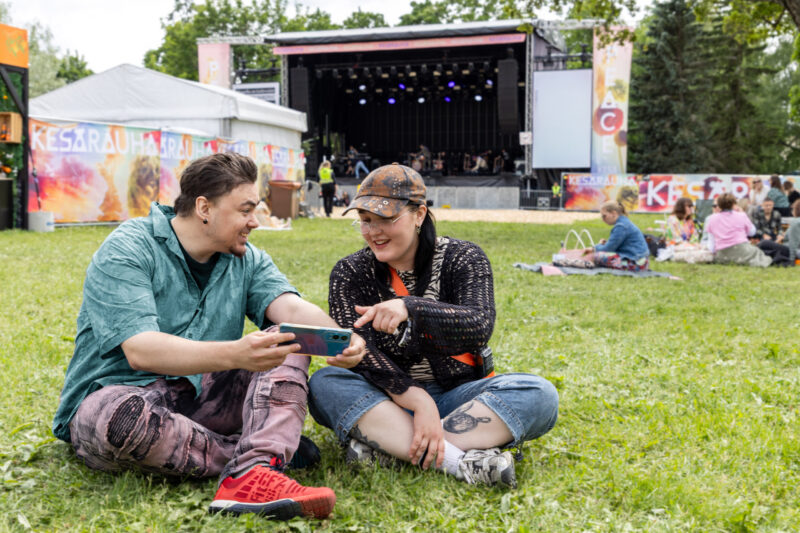
Cultural managers in a changing working life
The cultural manager’s profession is not only about the technical skill of organising productions, but about the ability to create moments that stay in people’s minds and bring communities together. No technology or automation can replace this significance, and that is precisely why the field is constantly growing and diversifying into new areas. The constantly evolving operating environment and audiences’ changing expectations challenge cultural managers. Even so, the ability to combine creative vision with practical implementation in such a situation makes the degree a truly sustainable choice.
Authors:

Sources:
Graduating Student Survey for Universities of Applied Sciences (AVOP), 2021–2025.
Material from the joint workshop of Humak’s Executive Team and heads of divisions, 2026.
Statistics Finland employment tracking data, 2023.
Results of the National UAS Career Monitoring Survey, 2021–2025.
Previously published in the Becoming a Professional blog series:
Publications (Articles, Blogs & Podcast)
- Blog

- Workplace Community Development
Becoming a Professional, part 3: Community Educator (Bachelor’s Degree), Workplace Community Development: A developer who helps work communities thrive
- Article
An interesting and intriguing, reflection on life
- Blog
- Research and Development
- Resilient Societies
“Belonging means being able to be completely yourself”
- Blog