
“Belonging means being able to be completely yourself”
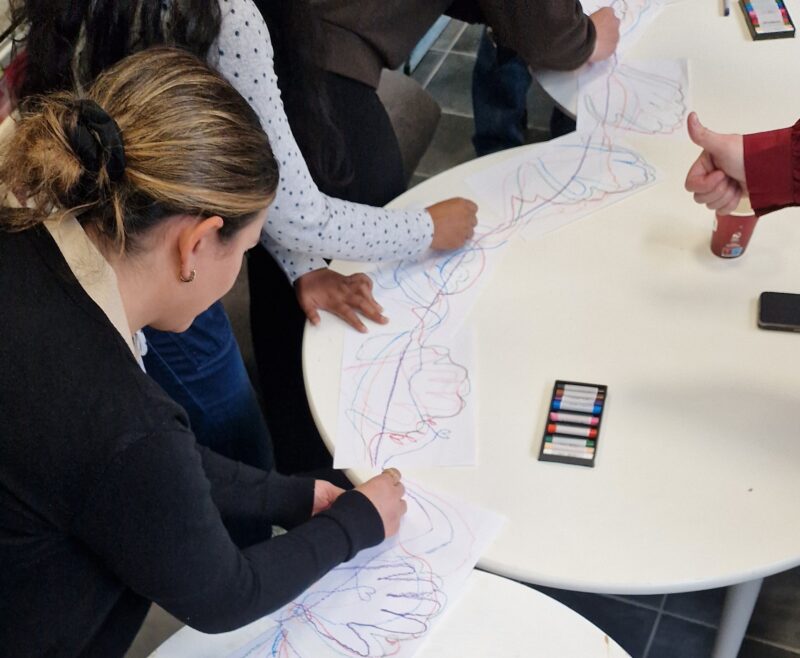
The goal of the I Belong project is to strengthen the agency, inclusion, and networks of immigrant women in Finland through art projects. Women from all over the world began in the pilot group on October 8, 2026. During the first session, we got to know each other, discussed what is important during the project, and began planning the art project. In our group activities, we speak both Finnish and English.
Getting to know each other through a creative warm-up
We utilize creative methods in our group activities, as research has shown that creative and experiential collaboration builds trust and a sense of belonging among participants, while also acknowledging different learning styles (Charfe et al. 2020). Moreover, creative and experiential methods support agency, which is based on a person’s belief in their own abilities (Nivala & Ryynänen 2014, p. 246). In our project, creative and arts-based methods encourage participants to let loose, brainstorm, and try out new things together.
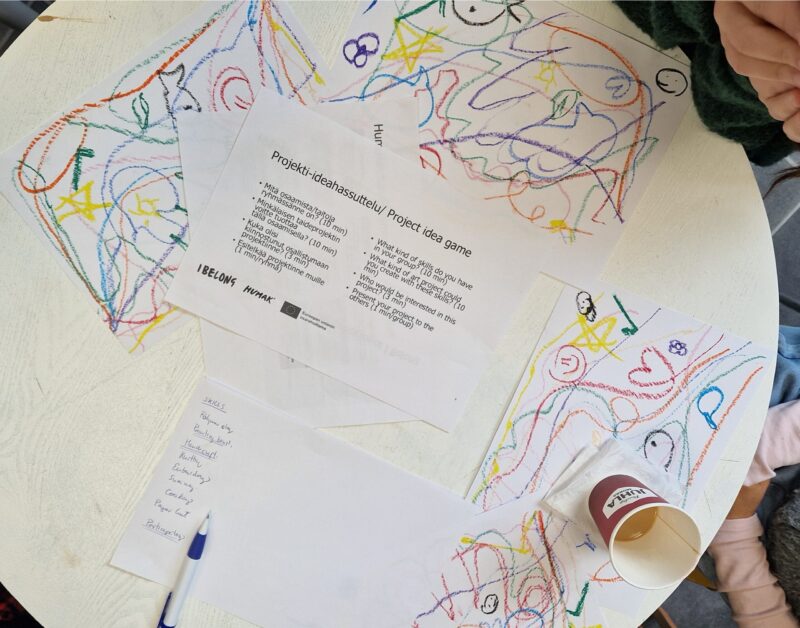
The first meeting of the I Belong pilot group was attended by eight women of different ages who have moved to Finland from eight different countries. We project team members were delighted that all the women who had been interviewed wanted to join the group and were able to attend the first meeting. The purpose of the first meeting was to get to know one another, identify each participant’s skills and strengths, and, based on those, begin brainstorming ideas for a joint art project.
We started with a creative warm-up exercise while reflecting on what each participant wanted to bring to the group. Together, we familiarized ourselves with Humak’s safer space principles and discussed how to create such a space together. We wrote down the things and values that are important to all of us during our activities and to which we all want to commit.
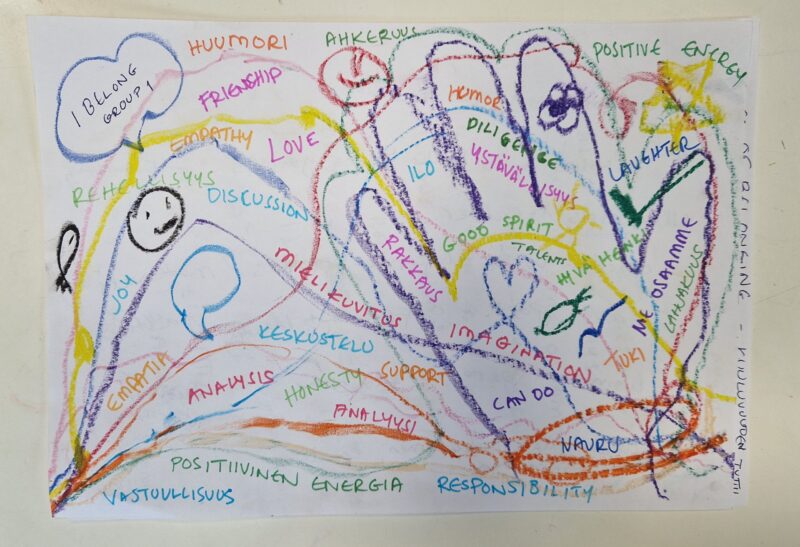
“Home is a place where you can flourish.”
Our approach is social-pedagogical, creative, and dialogic. Working in a dialogic manner brings together people from different backgrounds by promoting openness, presence, equality, and mutual respect (Nivala & Ryynänen 2024, pp. 235–236). In our work, participatory art is based on the participants’ own goals and the messages they wish to convey through their artworks.
First, the women discussed together what they want to express through the art project. The brainstorming was lively and continued via WhatsApp groups before the next meeting. Among other things, the discussion focused on when a person feels safe and that they belong in a new home country. As one participant noted: “I’d like to be a resident of Turku, not always a foreigner.”
Basic human needs include, among other things, the need to belong to a group, a sense of safety, the ability to express one’s creativity and realize one’s potential, and a sense of purpose in life. As one of the women beautifully put it: “Belonging means being able to be completely yourself, and home is a place where you can flourish.”
Working together fosters a sense of belonging
After the first meeting, one of the participants sent positive feedback to the whole group:
“I thought this activity was a nice way to express my own thoughts and collaborate with others. It was interesting to see what kinds of words the other participants chose. The chosen words showed that good relationships, supporting others, and connecting with people are important to us. From the perspective of social inclusion, I think activities like this help us understand what it takes to create a friendly and safe environment. In my opinion, it’s important that everyone has the chance to participate and express their own thoughts. Working together can also increase a sense of belonging and help people get to know one another.”
The I Belong project team believes that diversity and working together are a source of richness: everyone who comes to Finland can bring with them new skills, new perspectives, and new international opportunities. At the same time, it is important that we Finns meet people who have moved here with respect and compassion, open our networks, and learn to appreciate new perspectives. Art in its various forms can broaden our thinking and strengthen empathy by providing experiences that would otherwise be outside our own sphere of life (Nivala & Ryynänen 2024, p. 252). As one participant pointed out: “A mosaic brings different pieces together, and its beauty comes from all the different pieces that construct it.”
Author:
References:
Charfe, L. et al. (2020). Creating a learning space: Using experiential learning and creativity in the teaching and learning of social pedagogy. International Journal of Social Pedagogy 9:1, 10.
Nivala, E. & Ryynänen, S. (2024). Sosiaalipedagogiikka: Kohti inhimillistä yhteiskuntaa ja kestävää elämää (Toinen, uudistettu laitos). Gaudeamus. (Social Pedagogy: Toward a Humane Society and Sustainable Life. Second, revised edition).
Read more about the project:
Publications (Articles, Blogs & Podcast)
- Blog
- Research and Development
- Resilient Societies
Art projects to strengthen the social inclusion of immigrant women
- Blog
- Research and Development
- Resilient Societies
Our humanities students in technology companies, Part 3: collaboration through companies’ eyes
- Blog
- Research and Development
- Resilient Societies
Our humanities students in technology companies, Part 2: Student experiences
- Blog
- Research and Development
- Resilient Societies