Human rights at the core of Inclusion in higher education
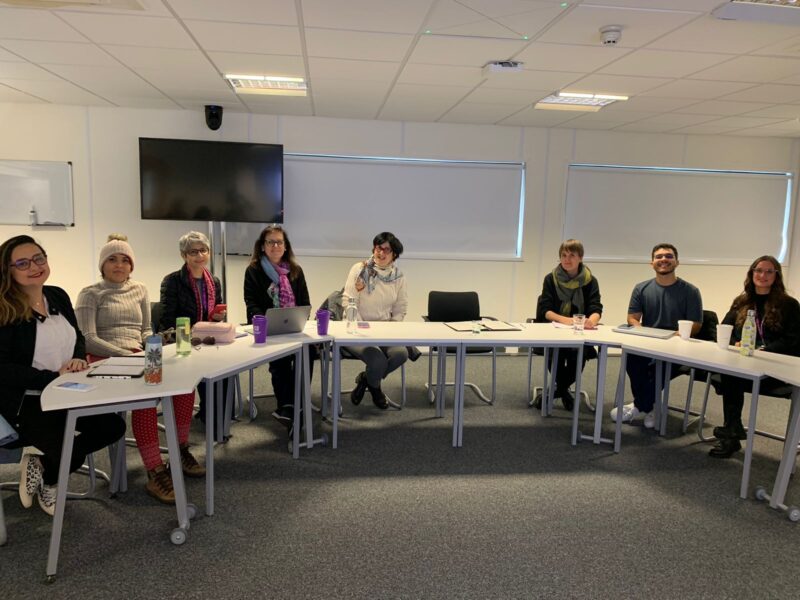
What does inclusion in higher education mean? This is the big question I was digging into in my staff exchange at Robert Gordon University (RGU) Scotland during the fall 2024. Not only was I able to learn about the issue in Scotland but also five colleagues from Federal University of Espírito Santo (UFES) Brazil were visiting. This blog post will summarize the panel discussion International Perspectives on Inclusion in Higher Education we had on the 26th of September 2024.
The aim of the panel was to discuss inclusion in higher education. We were introduced to all three countries and saw many differences such as the scale of people but also similarities such as getting to know the students as an important factor for supporting inclusion.
In the panel there were nine panelists: 5 panelist from UFES, 3 from RGU and 1 from Humak. Academic Development Lead Rachel McGregor facilitated the discussion.
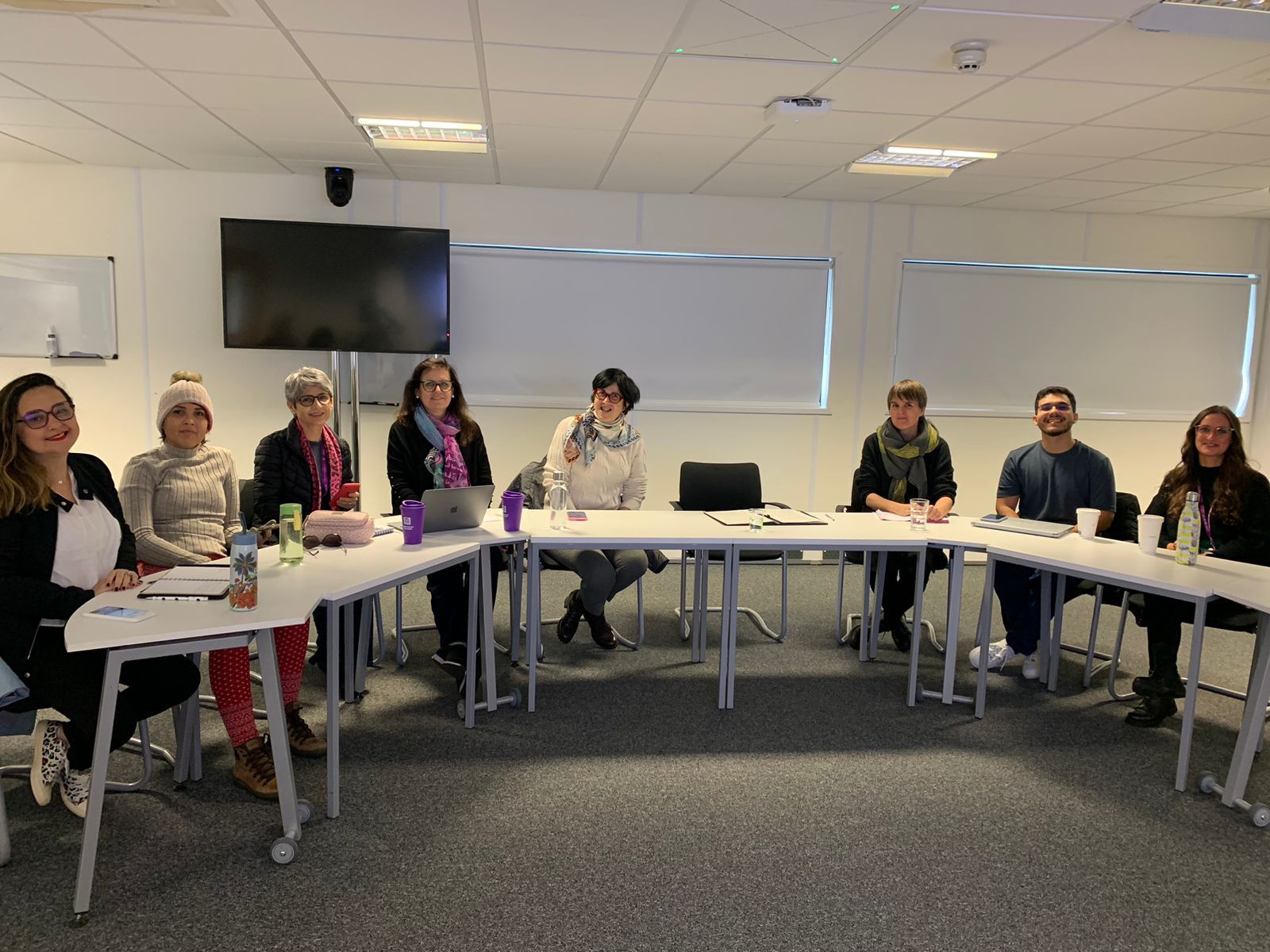 Panelists (from left) Prof. Fabiola Xavier Leal, Prof. Talita Prada, Prof. Eliza Bartolozzi Ferreira, Prof. Tânia Delboni, Prof. Maria Lúcia T. Garcia, senior lecturer Jenny Honka, PhD student Leonardo Costa Miranda, PhD student Joanna Santos-Petiot and (missing from photo) Prof. Thorsten Lauterbach. Photo by Development Lead Rachel McGregor.
Different scale in Brazil, Scotland and Finland
The panel was launched getting to know each country and their contexts. Compared to the other countries Brazil is huge. The population is 212 million. Scotland and Finland are closer to each other in the size of population (in Finland 5-6 million people similar to that of Scotland). In Brazil 23 % of the population 25-34 year old have higher education. The same figure in Finland is the average of 40 %. In Brazil there are 4,6 million students in higher education.
Brazil has history that dates back to colonization whereas Finland and Scotland are a part of Europe (even though the UK is no longer a part of the EU). In Brazil 55 % are black people and over 30 % of the population is poor or extremely poor. The South American background is very different from our European perspective.
Free higher education and geographical situation as part of discussion on inclusion
All of our systems strive for inclusion in education from a financial perspective. Higher education is free in all three countries although in Brazil and Scotland there are private universities besides the public ones. In Finland we take for granted the financial support given to students (KELA student grant, subsidised meals, student healt care etc.). All of the panelist found financial support to be crucial from the perspetive of inclusion.
Both in Brazil and Scotland geographical accessibility was discussed. Universities in Brazil are mainly situated in the Southwestern parts of the country whiitch is not necessarily accessible for people from the North. In Scotland the universities focus in bigger cities. Geographical aspects have an impact on accessibility.
Changes in systems and attitude needed
We discussed drivers of discussion in different countries. In Brazil the discussion lies in the black community and poor people. In addition, there is support for for example students with special needs and students of the LGTBQ community. These groups need affirmative actions to be included in higher education.
In Finland discussion points were made on migrant groups and the growing need for support due to young people’s learning difficulties and mental issues. In Scotland, young people with care backgound and some with also asylum seeker status were discussed. There are both structural and attitudinal changes in the support system that need to be addressed so that these groups can be included.
Supporting inclusion in practice
The discussion did not only focus on problems but also on solutions the different coutires have to offer. I made a list of these points made in the panel.
- Online studies can make higher education more inclusive for some groups but it may leave some groups out. Both online and live studies are needed. The pandemic made us create online solutions but competencies both for staff and students should be developed for making the online environment pedagogically as sound and safe as live studies.
- Different kinds of students should be supported from a community perspective. Different communities should be included in building inclusiveness. Universal design could remove institutional barriers.
- Inclusion in higher education happens long before applying for higher education. Some groups are left out due to the fact that their bar is seen lower than that of others. We should keep in mind already in childhood that for all groups higher education is an option.
- Knowing your students is important. When we get to know students it is easier to design assessment, attitudinal aspects, instrumental, methodological, communcational, transportational etc. individual arrangements. As professors and teachers we can build confidence for students and include them in their own learning.
- Having discussion and being aware of education not being inclusive is important. When we discuss inclusion in education we are talking about human rights. We should always be aware of ethnic, social, cultural, physical, intellectual and all diversity so that we can better see and address the barriers different people may have. These issues should not only be seen on individual level but on institutional and societal level.
Education as a human right
It was eye-opening to see how the values between all the participants were shared. We are all striving for inclusion in education, the key point being that we should always strive to be better by knowing more about inclusion and by keeping the human rights in education at the center of discussion. As the facilitator concluded: ”inclusion is a radical provocation, not a solution”.
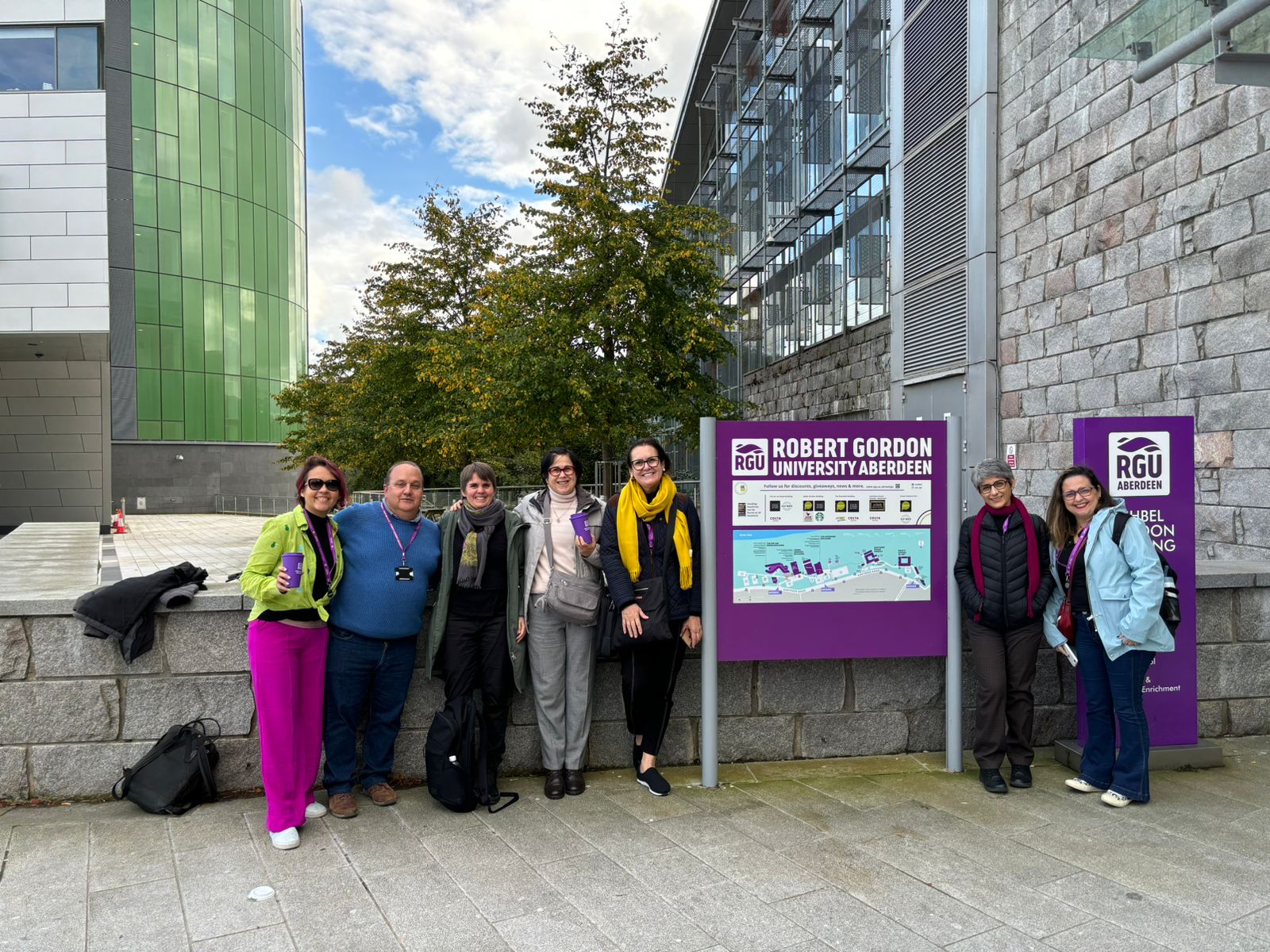 Visitors at Robert Gordon University. Second from the left our host Prof. Gary Spolander.
Text: Jenny Honka, MA (Art and design), Senior Lecturer, Community Education, Humak UAS
Publications (Articles, Blogs & Podcast)
- Article
- Community Educator
From Instructor to Co-Creator: Participatory Pedagogy in Community Education
- Blog
- Creative Field Entrepreneurship
When IP Travels: Collaboration Builds New Audiences
- Blog
New perspectives on sign language and Finnish life: an interview with French exchange student Hugo
- Blog