Preventing radicalization and gang formation through narrative methods

Violent radicalism refers to the justification of violence through ideology or worldview. Violence can be far-left, far-right, or religious in nature. Concerning is that the threat of violent radicalism has grown in Finland in recent years (Finnish National Agency for Education, 2025). In this article, I examine the concepts of radicalization and gang formation and how the expertise of Humak University of Applied Sciences (Humak) could be utilized in preventing radicalization.
Causes of violent radicalization
Violent radicalization is often linked to social exclusion, social malaise, and multiple problems. Risk factors for becoming involved in criminal activity include weak socioeconomic status, intergenerational marginalization, place of residence, young age, male gender, and substance abuse. These factors are reduced by promoting employment, education, inclusion, sobriety, and welfare and health. (Ministry of the Interior, 2016)
According to the Finnish police (Suomen poliisi 2025), particularly vulnerable to joining street gangs are young foreign-background men who share substance abuse or mental health problems as well as marginalization. Other reasons for drifting into radicalization processes and gang criminality are the polarization of society, segregation of residential areas, experiences of discrimination, and language and cultural barriers. However, it is not possible to define a clear profile of someone at risk of radicalization (Finnish National Agency for Education, 2025).
Other factors that predispose individuals to radicalization and gang formation include low self-esteem and experiences of isolation, injustice, and frustration. Experiences of poor opportunities to advance in studies or connect to working life strengthen feelings of exclusion. Polarized social climate and hostile inter-group relations on social media expose those in vulnerable positions to radicalization and gang formation. (Meines, 2017.) Religion-based extremism particularly targets Muslim-background men (RAN, 2019).
Poor literacy skills predispose to extremist thinking
Inadequate literacy skills predispose individuals to extremist thinking and push people to society’s margins, as it becomes difficult to be heard and become fully included in society. Among people with foreign backgrounds, there are many whose literacy skills are particularly deficient, although the problem increasingly affects native Finns as well. The key to improving poor literacy skills is to offer all people an engaging way to express themselves. Literacy should not be understood merely as mastery of grammar, but as a way of self-expression and fundamentally as the ability to control one’s life environment.
Protective factors against radicalization
Many factors protect against radicalization and gang formation, such as the opportunity to become part of a close social group united by similar experiences and creative activities. Telling one’s own story and public performance supports self-esteem, agency, and empowerment. (RAN, 2018.) Radicalization and gang criminality are prevented when those belonging to risk groups can process experiences that predispose them to criminal lifestyles in an identity-supporting environment.
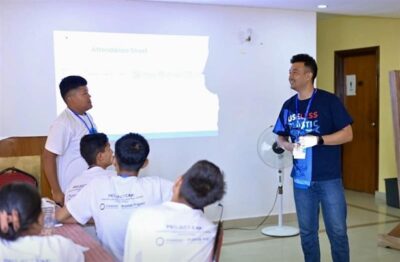
 Narrative (story-based) methods have received little attention in preventing radicalization. , even though research demonstrates its effectiveness in building identity and inclusion, empowerment, and strengthening community. Stock photo: Istock.
Prevention of radicalization
Efforts have been made to prevent radicalization in many ways. For example, teachers and youth workers have been trained to recognize signs of radicalization. Sweden has developed the concept of dialogue police, where police officers engage in conversations with young people to build trust. Additionally, there are various activities supporting disengagement, threat assessments, and monitoring.
Humak could promote narrative methods in preventing radicalization
Narrative (story-based) methods have received little attention in preventing radicalization. Storytelling may have been considered too soft a tool, even though research demonstrates its effectiveness in building identity and inclusion, empowerment, and strengthening community. Humak has solid experience in word-art-based men’s work and culturally sensitive support for immigrants in vulnerable positions. Many of Humak’s project workers have personally witnessed the power inherent in purposeful storytelling as a life-direction changer and how purposeful storytelling allows one to re-articulate their life.
Narrative methods offer access to factors that predispose to radicalization: identity crises, feelings of not belonging, and experiences of meaninglessness. Telling one’s own story through a creative process enables processing experiences and building an empowering identity. It would be entirely possible to construct a new operational model that combines narrative methods, peer support, and future building.
References:
Meines, M. (2017). The Root Causes of Violent Extremism-THE BASICS.
Opetushallitus. (2025). VÄKIVALTAISEN RADIKALISOITUMISEN ENNALTAEHKÄISY KOULUISSA JA OPPILAITOKSISSA.
Ran. (2018). Protective and promotive factors building resilience against violent radicalisation.
Ran. (2019). Factbook ‒ Islamist extremism, December 2019 – Migration and Home Affairs.
Sisäministeriö. (2016). Kansallinen väkivaltaisen radikalisoitumisen ja ekstremismin ennalta ehkäisyn toimenpideohjelma, sisäministeriön julkaisu 15/2016.
Suomen poliisi. (2025). Perustietoa katujengeistä ja niihin liittyvästä rikollisuudesta – Poliisi.
Author: Arto Lindholm, Doc.Soc.Sci, Principal Lecturer, Humak University of Applied Sciences.
Publication date: 26.11.2025
Publication series: Harticles
Publisher: Humak University of Applied Sciences
Publications (Articles, Blogs & Podcast)
- Article

- Community Educator
From Instructor to Co-Creator: Participatory Pedagogy in Community Education
- Blog
- Creative Field Entrepreneurship
When IP Travels: Collaboration Builds New Audiences
- Blog

New perspectives on sign language and Finnish life: an interview with French exchange student Hugo
- Blog