
When IP Travels: Collaboration Builds New Audiences

Creative industry intellectual property (IP) no longer remains fixed in one place. Ideas are born within specific cultural contexts, but their value is increasingly realized on a global scale. International collaboration, localization, IP development, and streaming platforms together shape the kinds of content that evolve into multilingual success stories.
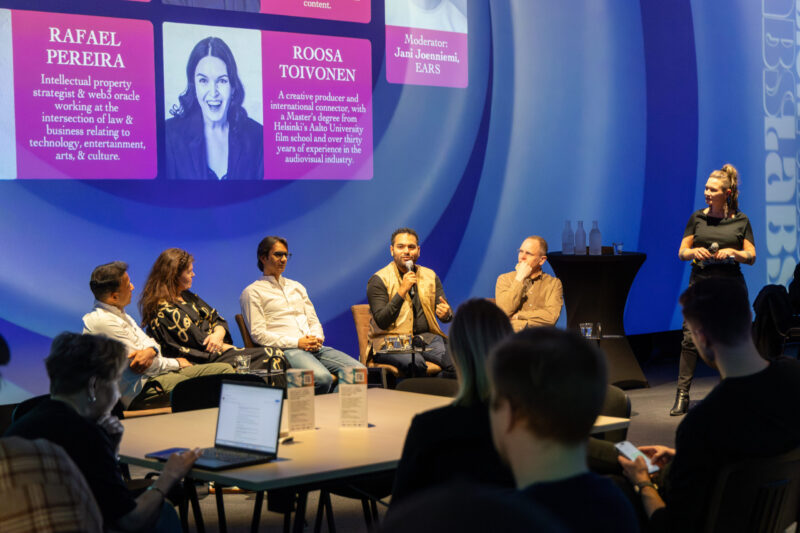
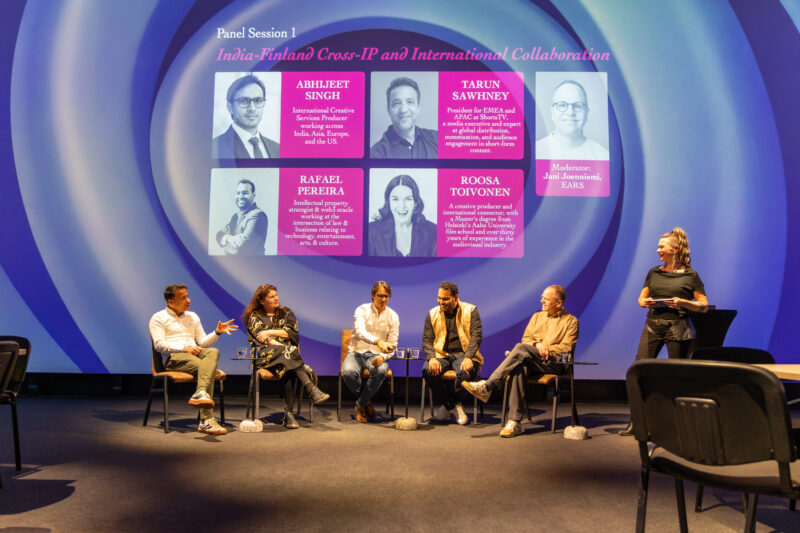
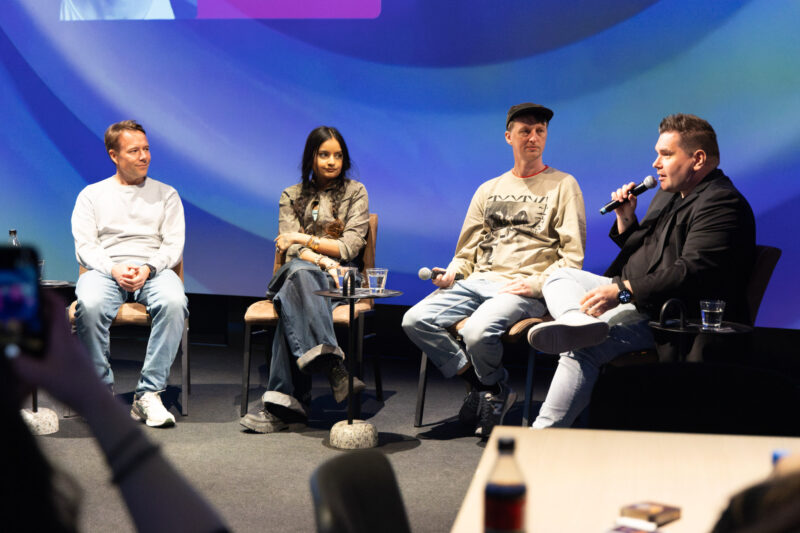
The international panel discussion at the closing event of Songs & Sessions highlighted that IP alone is not enough for success. The discussion featured Tarun Sawhney (EMEA, APAC and ShortsTV), Roosa Toivonen (Good Hand Film & TV), Abhijeet Singh (Film Village Line Production), Rafael Pereira (TINNUTS), and was moderated by Jani Joenniemi (EARS). Joenniemi especially emphasized the importance of international networking in the growth of creative industries. In this context, international collaboration functions as a growth platform for IP. When content is developed collaboratively by creators from multiple countries, new perspectives and combinations emerge that no single market could produce alone. Collaboration is not merely resource sharing, but an active process of meaning-making.
Producer Abhijeet Singh summarized this insight clearly: “We need to find a way to build a cultural bridge.” Success in international productions therefore requires the ability to establish a shared working method across different cultures. For example, discussions around collaboration between the European and Indian music industries highlighted how different storytelling traditions, audience expectations, and production models can be combined. This results in content that already carries broader international potential from the outset.
Localization Is More Than Translation
A key challenge in collaboration is cultural context. Moving content from one market to another cannot be done through translation alone. Meanings, humor, emotions, and even individual words can shift significantly across languages. IP specialist Rafael Pereira noted: “It is not only about translation, but about adapting meanings and understanding cultural context.” Localization is therefore a process of adapting content for a target audience without losing its core identity. Successful localization requires local partners who understand audience expectations and cultural sensitivities. Without this expertise, a product may feel alien even if it is technically accessible.
IP Development Has Become Multidimensional
IP development has shifted from a linear to a nonlinear model. A single idea can now live across multiple formats and languages. A short film can evolve into a series, a music track into a broader audiovisual concept, and one format can generate multiple localized versions.
Producer Roosa Toivonen described the current thinking precisely: “IPs are essentially any content that has been tested and proven interesting to audiences.” Adaptations and remake productions play a central role in this development, as they enable the rapid scaling of proven concepts. Increasingly, IP is not only licensed but co-developed with international partners, allowing value to be created over a longer lifecycle.
Songwriting and International Networks
A second panel discussion focused on songwriting collaboration and international music publishing. The panel included Tommi Tuomainen (Elements Music), Bhumi (artist and composer), and Kyösti Salokorpi (composer), and was moderated by Henrik Tala (Song Asia). The panelists shared their experiences of how international collaboration networks influence songwriting, production, and distribution across different markets.
The discussion highlighted the importance of understanding local music cultures while simultaneously creating content that resonates with broad audiences across language and national borders.
Streaming Platforms Are Changing Audiences and Markets
Streaming platforms have significantly accelerated this transformation. They have made content globally accessible and lowered the threshold for consuming productions in different languages. At the same time, audiences have become accustomed to multilingual content and have developed a growing interest in local yet universally resonant stories.
Tarun Sawhney emphasized an important perspective: “The more local the subject matter is, the greater the opportunity it has to resonate globally.” At the same time, competition has intensified significantly, as all content now exists in the same digital environment. This forces creators to invest in quality, originality, and cultural relevance.
Multilingual Success Stories Emerge Through Collaboration
A multilingual success story is built through collaboration. It requires international cooperation, cultural understanding, strategic IP development, and the ability to leverage digital distribution channels. The decisive factor is the balance between local authenticity and global accessibility. When this balance is achieved, IP does not only travel, it grows and builds new connections between audiences. Artist and songwriter Bhumi described the essence of collaboration as follows: “When you find people who understand the feeling and share the same feeling, collaboration cannot go wrong.”
This blog has been produced as part of the FusionLabs – Competitiveness through Cross-Disciplinary Innovation Expertise Project.
Could Web3 open new opportunities for international growth in the creative industries?
According to Rafael Pereira, the issue is not only about technology, but about how creative professionals can build more direct relationships with audiences, manage their rights more independently, and develop new revenue models in a global environment.
Interested? Explore Rafael Pereira’s ideas in more detail in his interview at the Songs & Sessions closing event.
Publications (Articles, Blogs & Podcast)
- Article

- Creative Field Entrepreneurship
Youth Entrepreneurship as a Resource for Future Belief
- Article

- Creative Field Entrepreneurship
The Window to India Is Open: Why Focused Strategy Defines the Next Breakthrough in the World’s Fastest-Growing Music Ecosystem
- Article

- Creative Field Entrepreneurship
Towards a More Sustainable and Responsible Humak – “Sustainable Wednesday Blog Series, Part 1”
- Article
- Creative Field Entrepreneurship