
Becoming a Professional, part 1: Community Educator (Bachelor’s Degree), NGO and Youth Work: A profession that matters every day
Many of us remember a safe adult who was there at exactly the right moment. Perhaps it was a youth worker who listened, or a volunteer who pointed the way forward. Community educators graduating from the NGO and Youth Work programme are professionals in building encounters like these. This blog explains what roles they have taken on, where they have been placed, and what opportunities the sector offers for the future.
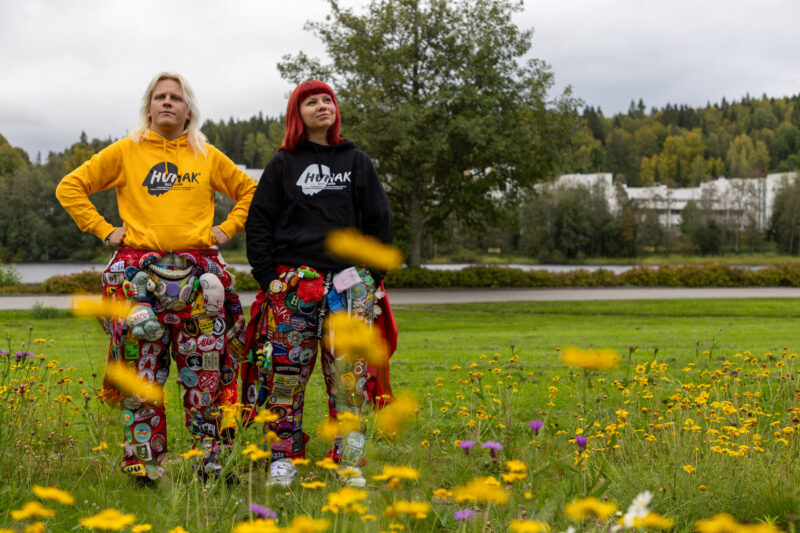
A wide range of roles involving young people and communities
The Community Educator (Bachelor’s Degree) with a specialisation in NGO and Youth Work provides broad expertise in youth services, NGO work, social and preventive work, and the promotion of community and participation. It’s this broad scope that is also reflected in the wide variety of roles and organisations in which graduates have found employment.
Graduates work in municipal youth services, for example as youth workers and in school youth work, in NGOs in coordinator and management roles, among others, and in the social sector in various guidance roles with children, young people and families. Many also find their place in integration and employment services or in project and development work.
A field in constant development
Just under half of the graduates from the NGO and Youth Work programme find employment in Southern Finland. This is explained by the job opportunities offered by larger cities, the concentration of NGOs in the Helsinki metropolitan area and the focus of project funding on urban centres. Even so, just over half of graduates find work elsewhere in Finland. This reflects the need for the field throughout the country and good employment prospects, especially in growing cities.
In Lapland, Northern Finland and smaller municipalities, there are fewer job opportunities than in Finland’s southern growth centres, but there is still demand for community educators’ expertise, for example through mobile services and multidisciplinary cooperation. Some employment contracts are fixed-term, particularly in youth work and projects, and entrepreneurship is still rare. Many therefore build their early careers through several shorter employment contracts, gaining broad experience of different organisations and roles along the way.
In Finland, social welfare legislation does not currently recognise the Community Educator as a formal qualification for all social welfare roles. This has been identified as an area for development, and the aim is to address it in the future. This is done through cooperation between education and working life and by updating curricula. For years, Humak has advocated for establishing the position of community educators and worked to ensure that their employment opportunities are maintained and expanded in those social sector roles that do not specifically require education in the social sector.
Growing competence needs
Digital youth work, multicultural competence and integration work, mental health and wellbeing work, and strengthening participation are becoming increasingly central competence needs. School youth work is gaining particular importance as schools strengthen their role as hubs supporting young people’s wellbeing.
Community educators are also needed online and in new kinds of encounters. Building online communities, social media skills, game education and combining remote and face-to-face encounters open up new ways of reaching young people. In smaller municipalities and sparsely populated areas in particular, activities often look different from those in larger towns. Various mobile services, pop-up activities and local networks may take on an important role.

Young people are increasingly concerned with questions about the future of society and the environment, which creates a need for education on sustainability and ways for young people to have a say on these issues. All of this offers community educators natural ways to broaden their expertise and build a career that adapts to changes in society.
Skills worth focusing on: insights from our alumni
The national career monitoring survey is an annual study in which Humak alumni also take part. In the most recent survey from 2025, community education alumni highlighted important skills they had focused on while still studying.
Our alumni encouraged current students to develop networking skills in particular, along with the ability to work in multi-professional environments. Taking care of one’s own wellbeing and coping emerged just as strongly. Stress tolerance, resilience and the ability to set limits on workload were considered important.
Alumni also wished for more practical administrative skills, such as project and funding expertise, project management and basic financial skills, to support both salaried employment and entrepreneurship. Interpersonal skills, such as the ability to raise difficult issues and handle conflicts, were also highlighted in several responses.
Community educators stay resilient through change
Whether it is about encountering young people or keeping everyday life running, society’s need to support people and build functioning communities will not disappear. This is exactly what keeps the future of community educators stable. The answer to the growing need lies in versatility: the ability to move smoothly between youth work, the NGO sector and the social sector is the greatest strength of the degree. It opens doors to new roles in a changing working life. At the heart of the profession is the community educator’s ability to be present for the individual while developing communities at the same time. This is what keeps the work meaningful in the future as well.

Sources:
Graduating Student Survey for Universities of Applied Sciences (AVOP), 2021–2025.
Material from the joint workshop of Humak’s Executive Team and heads of divisions, 2026.
Statistics Finland employment tracking data, 2023.
Results of the national career monitoring survey, 2021–2025.
Publications (Articles, Blogs & Podcast)
- Blog
- NGO Work
- Youth Work
Becoming a Professional, part 1: Community Educator (Bachelor’s Degree), NGO and Youth Work: A profession that matters every day
- Blog
- Research and Development
- Resilient Societies
Art projects to strengthen the social inclusion of immigrant women
- Article

- Community Educator
From Instructor to Co-Creator: Participatory Pedagogy in Community Education
- Blog
- Creative Field Entrepreneurship