
Art projects to strengthen the social inclusion of immigrant women
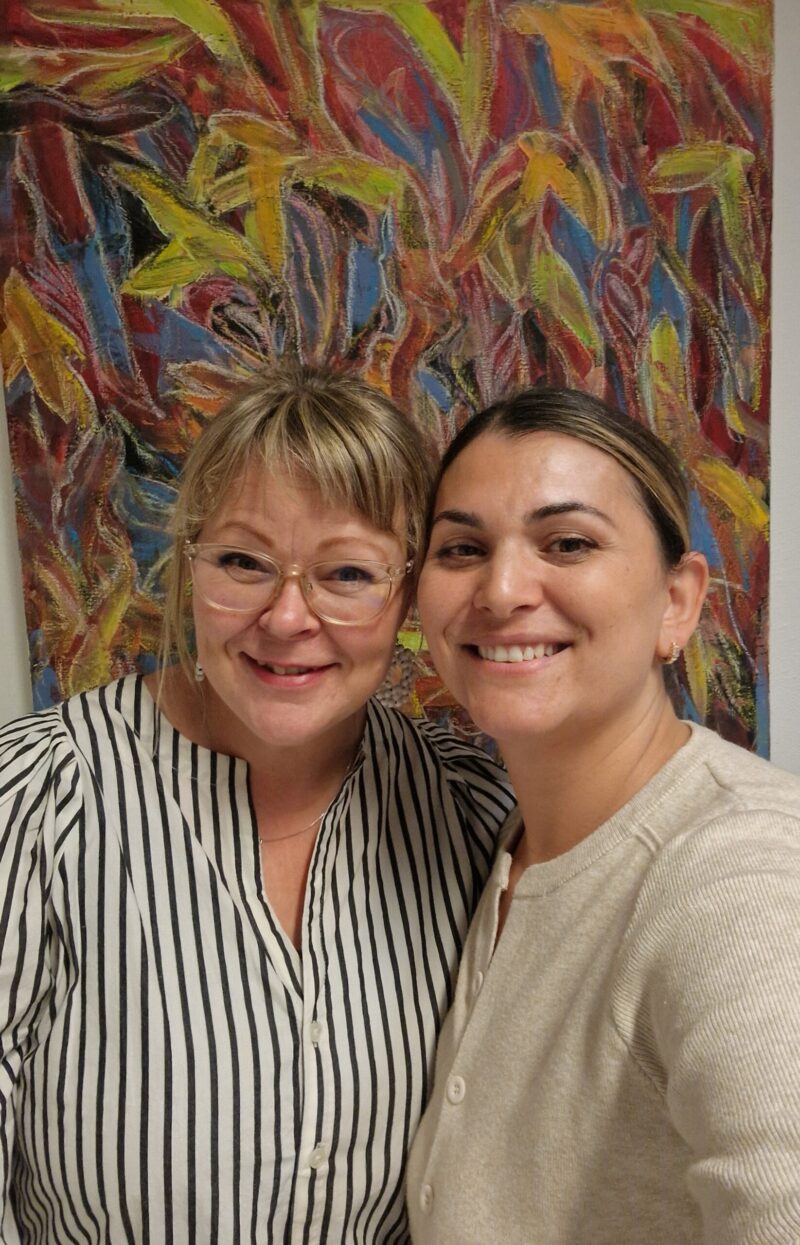
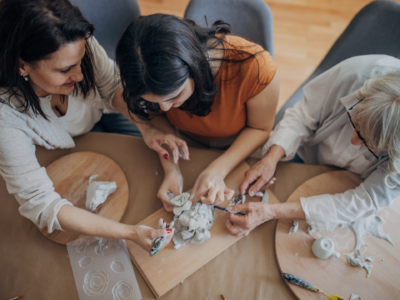
In our time, when social media platforms are increasingly emphasizing the differences between “us” and “them,” it feels particularly meaningful to launch the I Belong project. The project aims to promote the inclusion, agency, and well-being of immigrant women in our society by realizing collaborative art projects.
The pilot group of I Belong project begins in October 2026
The first group of the three-year I Belong ESF+ project at Humak University of Applied Sciences began its activities in October 2026 in Turku. On October 1, we met with and interviewed eight women interested in the project to hear their thoughts, hopes, and goals regarding the activities. Some of them have been in Finland only a short time, while others have lived here longer.
The women, who come from many different countries, said that the project’s name, I Belong, had resonated with them and touched them. According to the women, the idea of belonging – or not belonging – also evokes difficult emotions and it is important to share them together. The women who signed up for the group hope the art project will offer meaningful creative activities, new connections, sharing, peer support, well-being, new learning, and a sense of community. Engaging with art in its various forms motivated and inspired them to join the group where participants plan and carry out an art project together, while getting familiar and networking with organizations in the Turku region.
An increasingly diverse population must be able to work together, for the common good
Finland is becoming increasingly diverse. In 2024, people with a foreign background accounted for 11 percent of the total population and 12 percent of the 20–64 age group. Their significance is particularly evident in the workforce: throughout the 2000s, growth in the number of employed people was largely driven by an increase in the number of workers with a foreign background. Whereas in 2010 only 4 percent of the employed population had a foreign background, by 2024 that share had risen to 10 percent.
In many sectors, the share of workers with a foreign background is even higher:
- 9% in the social and health care sector
- 16% in the information and communications sector
- 22% in administrative and support services and
- 29% in the accommodation and food services sector.
This trend is also evident in women’s employment. Although more than a quarter of women with a foreign background were outside the labor force, their employment rate increased by 17 percent between 2016 and 2022, before the onset of the economic recession. (Statistics Finland 2024.)
While our society becomes more diverse, the UN Committee on the Elimination of Racial Discrimination is concerned about the prevalence of racist hate speech in Finland. Because racist hate speech has not been effectively addressed, racism and xenophobia have increased, resulting in a decline in people’s sense of security and trust in public institutions. In its latest report in August 2026, the UN Committee on the Elimination of Racial Discrimination issued recommendations to Finland regarding, among other things, combating racist hate speech and ethnic profiling, and accelerating the reform of the Criminal Code. (Finnish Government, 2026.)
Humak University of Applied Sciences wants to participate in creating a safe and prosperous Finland for all where all the people living in the country can utilise their skills and have a sense of belonging in communities and society. The values that guide our work are community, responsibility, equality and humanity.
Seen and heard through art
The sense of belonging is an important building block of social inclusion, which means connection to something meaningful (Nivala & Ryynänen, 2024, p. 161). Belonging to a community means that a person can safely be themselves and feel valued just as they are. Hence, it is worth asking whether we include all people living in Finland in our communities, or whether we exclude some of them. And how could we include everyone?
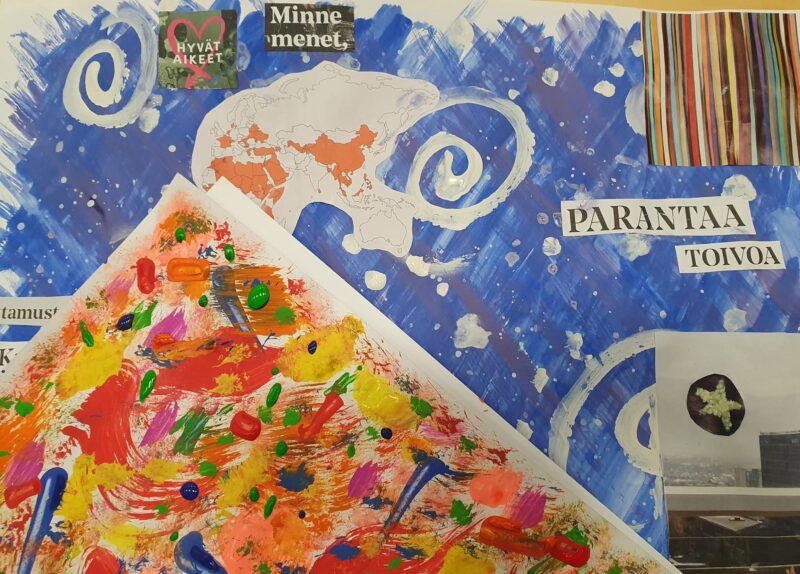
According to a participant in the I Belong project, immigrant women should be more visible in Finland, and their stories should be told and heard more often. One of the women pointed out that art can be a channel for social change. One participant felt that creating and experiencing art can also be therapeutic and help people cope despite challenges. Through art, we can be seen and heard and imagine better futures together.
According to Sevime Bushi Hoxha, expert in our project, moving to a new place broadens one’s thinking and “enriches the brain,” as people learn to see things from new perspectives. The I Belong project team agrees with her: different perspectives are a source of richness, and by working together we learn from one another. Our goal is that during the project, at least 70 women will realize various art projects together, while also strengthening their project expertise and networks in Finland.
Author:
References:
Finnish Government. (2026). UN Committee on the Elimination of Racial Discrimination issues recommendations to Finland. Retrieved 2 October 2026.
Nivala, E., & Ryynänen, S. (2024). Sosiaalipedagogiikka: Kohti inhimillistä yhteiskuntaa ja kestävää elämää (Toinen, uudistettu laitos). Gaudeamus. (Social Pedagogy: Toward a Humane Society and Sustainable Life. Second, revised edition).
Statistics Finland. (2024). Every tenth employed person was of foreign origin in 2024. Retrieved 2 October 2026.
Read more about the project:
Publications (Articles, Blogs & Podcast)
- Blog

- Research and Development
- Resilient Societies
Our humanities students in technology companies, Part 3: collaboration through companies’ eyes
- Blog

- Research and Development
- Resilient Societies
Our humanities students in technology companies, Part 2: Student experiences
- Blog

- Research and Development
- Resilient Societies
Our humanities students in technology companies, Part 1: What is this all about?
- Article
- Research and Development
- Resilient Societies