
The call for information production and dissemination
This article is a translation of an article originally published in Nuorisotyö magazine on 16 June 2026.
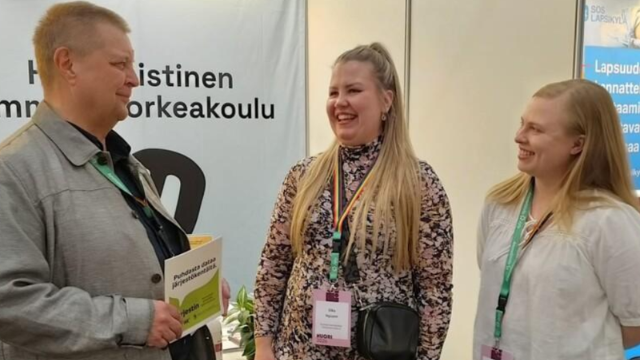
“There’s a growing demand for information on the activities of organizations. Demands from political decision-makers, the media, public officials, and society at large for accountability regarding activities funded by tax revenue are increasing, and are likely to continue to do so in the future. There is a need for transparency not only regarding the activities of organizations and their results, but also increasingly regarding the impacts of the activities,” summarizes Mikko Cortés Téllez, who works as a senior coordinator in the youth work and youth policy area of expertise at the Ministry of Education and Culture. His responsibilities include, among other things, preparing annual grants for national youth sector organizations, monitoring the implementation of the National Youth Work and Youth Policy Programme, and supporting Sámi-language youth work and activities.
The key to measuring social impact
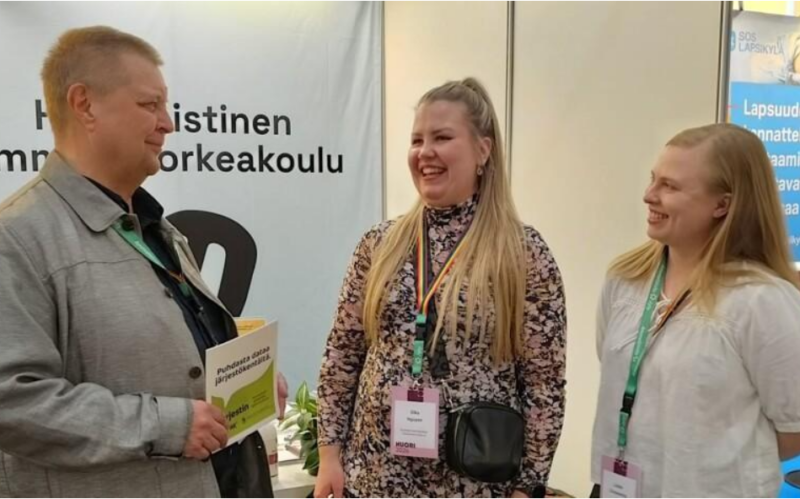
Reijo Viitanen, education manager at Humak, points out that the social significance of organizational youth work also requires justification and evidence that activities are effective. “Järjestin plays a key role in demonstrating this impact and collecting operational data. The social significance of the impact will increase in the future, so the service is being developed to benefit organizations. The benefits are both direct, such as providing practical assistance for the organizations in collecting operational data, and indirect by demonstrating the impact of organizational youth work,” Viitanen explains, and continues: “Digitalization and Artificial Intelligence are progressing in any case. Youth organizations are now at the threshold where they need to decide whether they want to be involved or not. It is likely that in the 2030s, the government administration will process things like grant applications with the aid of artificial intelligence. At that point, those who have embraced digitalization early enough and have gained experience from it will be the ones who come out on top.”

The fruits of information production training
Niina Autiomäki is the product owner and developer of Järjestin, and her work has made her familiar not only with the need for transparency, but also for clarity and easy data collection. She has trained organizational youth work professionals in the ins and outs of data collection and the services offered by Järjestin. More than 200 people have participated in training sessions organized exclusively for representatives of national youth organizations. “The content of the training programmes is beginning to diverge. I recognize three different user groups. There is an increasing number of organizations who need a training approach based on work supervision; in other words, we go through the organization’s information production together, consider how to systematize it, and explore how to utilize reports. Even though the organizations collect data, the content and usability of data collection aren’t always optimal,” says Autiomäki.
Järjestin is versatile
“The second target group for Järjestin training comprises relatively self-directed, new users who have used Webropol and its features to collect their data. Still, even this target group often comes back to me with specific questions. The third group are so-called advanced Järjestin users who want more precise information on how to use Järjestin; such as information about inherited and granted access rights, or the ability to customize a survey’s graphics using pre-made themes or custom graphic elements,” explains Autiomäki.
Continuous development is the key to progress
Senior Coordinator Mikko Cortés Téllez calls for time and determination. “The continuous development of organizational youth work is important. It often feels as though there isn’t as much time for development as it deserves,” he reflects. Autiomäki agrees. She notes that Järjestin, for example, is being implemented and utilized in various ways by national youth work organizations. This comes up in the context of various training sessions. “My general impression is that people in the field are gradually beginning to realize the quality of Järjestin and that it is here to stay. I continue to get messages from people who fear that Järjestin will create more work and who doubt its compatibility with their organization’s specific data collection methods. This perception is very commonly dismantled in encounters, precisely by using the aforementioned work supervision-based approach.”
More information on different information production services is available below
- Suomisport provided by the Finnish Olympic Committee
- Finnish Youth Work Statistics
- Järjestin -–Digital information production service for youth sector organisations
* NUORI26 events = the YOUTH26 event, an annual event that gathers together the entire youth sector in Finland. An event where 3000 professionals and volunteers working in the field of youth work come together to network and be inspired.
* Pinskuliitto = Pioneers of Finnish Democracy, an organization for children, young people, and families.
Author and photos:
Read more about Järjestin

Publications (Articles, Blogs & Podcast)
- Article
- NGO Work
- Research and Development
An interesting and intriguing, reflection on life
- Blog
- Research and Development
- Resilient Societies
“Belonging means being able to be completely yourself”
- Blog
- Community Educator
- NGO Work
- Youth Work
Becoming a Professional, part 1: Community Educator (Bachelor’s Degree), NGO and Youth Work: A profession that matters every day
- Blog
- Research and Development
- Resilient Societies